

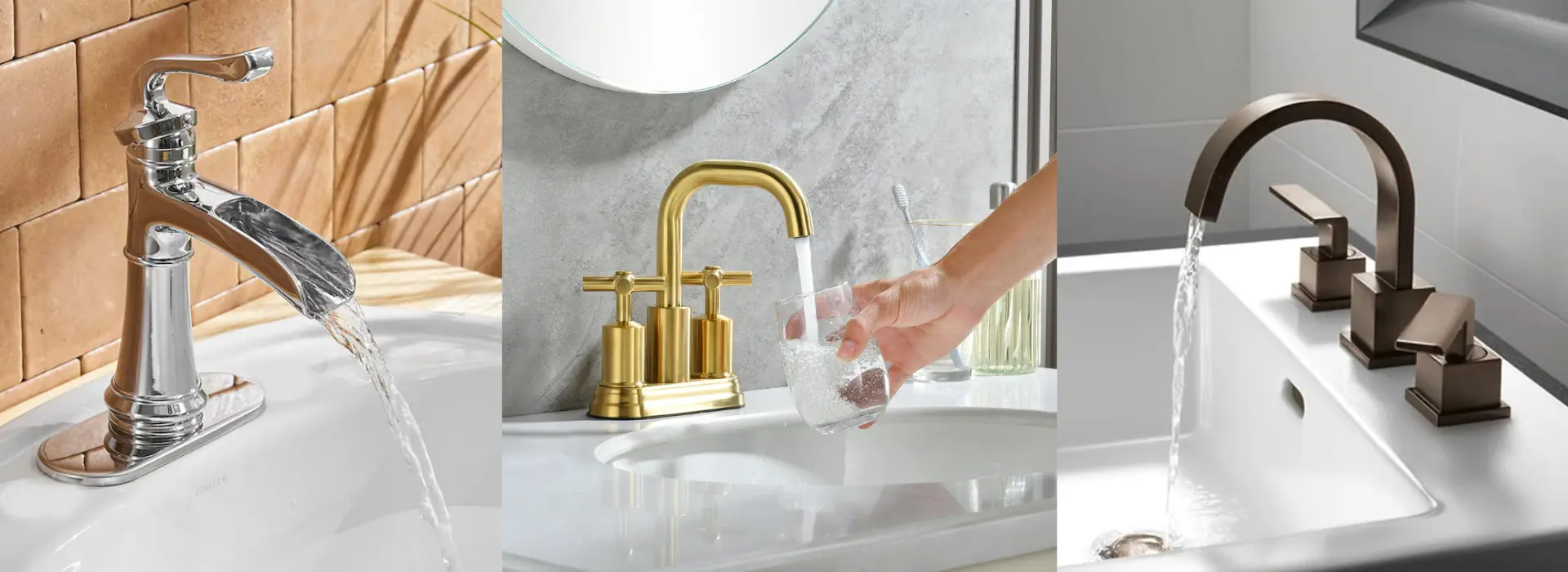
How Faucet Finish Affects Maintenance and Water Spots
People rarely regret buying a faucet on the day they install it. That part almost always goes well. The fixture looks clean, reflections are sharp, the surface feels untouched by daily life.
by Sooraj T. Mathews
Mar 18, 2026
4 minute read
Table of Contents
- Introduction
- Water Spots Are a Residue Story, Not a Water Story
- Why Identical Use Produces Different Visual Results
- Chrome: Visually Precise, Visually Demanding
- Brushed Nickel: Reduced Contrast, Reduced Stress
- Matte Black: Visually Forgiving, Mechanically Sensitive
- Stainless Steel: Stable, Neutral, Predictable
- Dark and Patina Finishes: Visual Flexibility by Design
- Maintenance Is Driven by What Bothers the Eye
- Cleaning Mistakes That Quietly Accelerate Wear
- Choosing a Finish That Actually Works in Real Homes
Introduction
People rarely regret buying a faucet on the day they install it. The fixture looks clean, reflections are sharp, and the surface feels untouched by daily life. For a brief moment, it seems like it might stay that way forever.
But over time, subtle changes appear—faint spots, light haze, and marks that quietly return even after cleaning. Eventually, the faucet stops feeling new and starts demanding attention.
While hard water and cleaning habits play a role, the finish itself is often the real factor. Faucet finishes don’t just influence style—they determine how visible daily use becomes and how often maintenance feels necessary.
Water Spots Are a Residue Story, Not a Water Story
The term “water spots” can be misleading. Water itself isn’t the issue—what remains after it evaporates is.
Tap water contains dissolved minerals like calcium. When droplets dry, these minerals stay behind, forming a thin residue layer. This layer reflects light differently, which is what makes spots visible.
Hard water increases this effect due to higher mineral content. Kitchens and bathrooms accelerate the process because of constant splashing and moisture exposure.
Why Identical Use Produces Different Visual Results
Two faucets in the same home can age differently. One may look constantly spotted, while another appears stable.
This happens because finishes interact with light differently. Reflective finishes highlight imperfections, while textured or matte finishes diffuse light and reduce contrast.
The residue remains the same—the perception changes.
Chrome: Visually Precise, Visually Demanding
Chrome delivers a bright, mirror-like appearance that many homeowners love. It looks clean and polished under ideal conditions.
However, its reflectivity makes water spots, fingerprints, and smudges highly visible. Chrome is not fragile—it’s durable and corrosion-resistant—but it is visually demanding.
It doesn’t hide usage. It reveals it.
Brushed Nickel: Reduced Contrast, Reduced Stress
Brushed nickel offers a softer, muted appearance. It may seem less striking initially, but its texture diffuses reflections.
Water spots still occur, but they blend into the surface instead of standing out. This creates a more consistent appearance and reduces the need for constant cleaning.
Less contrast means less visual stress.
Matte Black: Visually Forgiving, Mechanically Sensitive
Matte black finishes suppress reflections, making spots less noticeable. This allows the faucet to appear cleaner for longer.
However, cleaning requires care. Abrasive materials or harsh chemicals can damage the coating, creating uneven patches.
Maintenance is less frequent, but must be gentler.
Stainless Steel: Stable, Neutral, Predictable
Stainless steel sits in the middle ground. It shows imperfections without exaggerating them.
Its consistent appearance and moderate maintenance needs make it a practical choice, especially in kitchens.
Dark and Patina Finishes: Visual Flexibility by Design
Finishes like oil-rubbed bronze embrace variation. Instead of maintaining uniformity, they develop character over time.
This natural variation helps mask water spots and minor marks, making them less noticeable.
These finishes evolve rather than trying to remain unchanged.
Maintenance Is Driven by What Bothers the Eye
Maintenance isn’t just about effort—it’s about perception.
- Reflective finishes highlight every mark
- Brushed finishes soften visibility
- Matte finishes reduce contrast
- Patina finishes embrace change
The same faucet can feel easy or exhausting depending on how visible the marks are.
Cleaning Mistakes That Quietly Accelerate Wear
Aggressive cleaning often causes more harm than good.
- Abrasive pads can damage textures
- Harsh chemicals can degrade coatings
- Excessive force can create uneven finishes
Gentle cleaning methods deliver better long-term results.
Choosing a Finish That Actually Works in Real Homes
Finish decisions are often made under perfect conditions—ideal lighting and untouched surfaces.
But real homes involve repeated use, water exposure, and routine cleaning. Over time, the finish determines how manageable that experience feels.
The best faucet finish isn’t the one that looks perfect on day one. It’s the one that continues to look acceptable without constant attention.
-min (1).png)
Sooraj T. Mathews
Sooraj is a content creator with 6 years of experience and a knack for making SEO work feel like storytelling. With 4 years in the digital marketing game, he blends strategy and creativity to craft content that clicks and converts. Outside of work, you'll find him unwinding with a good puzzle or getting lost in a great book—always curious, always learning.
.webp)

.webp)
.webp)