
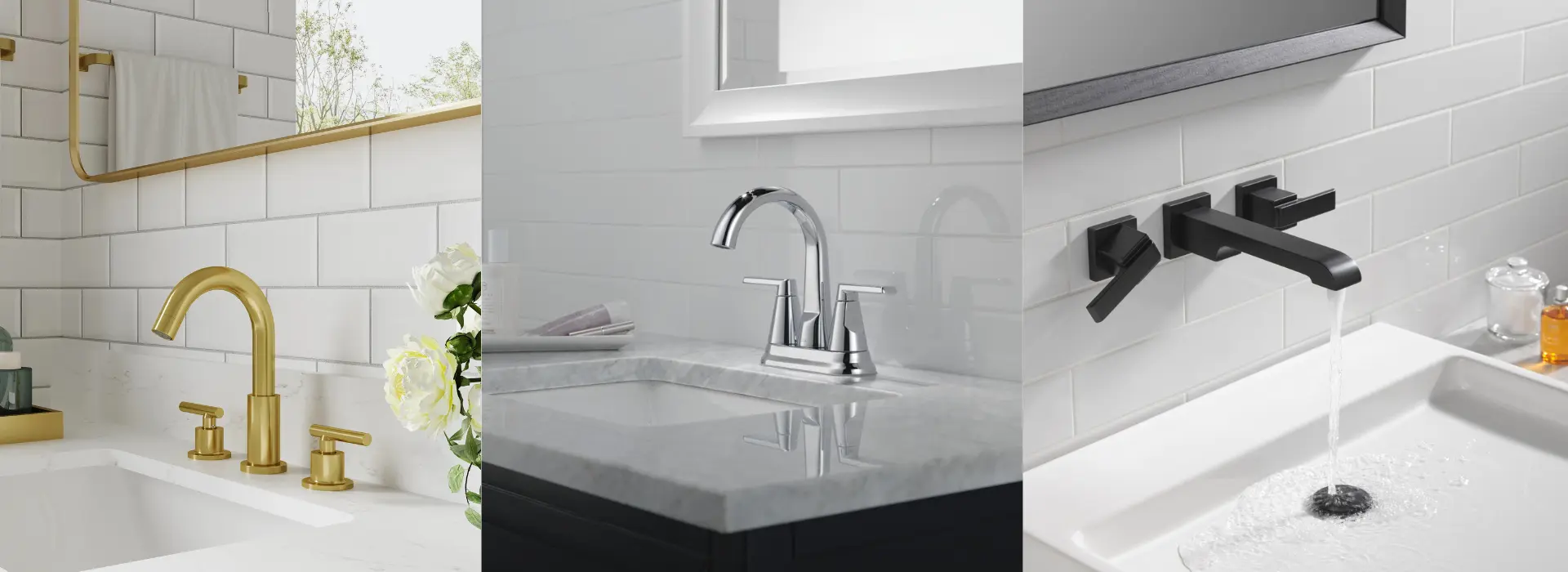
You wipe the faucet, step back, and it still doesn’t look right. The surface doesn’t bounce light the same way it used to. There’s a dullness near the handle. Maybe a faint discoloration you swear wasn’t there before. You start cleaning it more often, thinking that’ll fix it. It doesn’t.
That’s usually when the realization hits: the finish is wearing out.
And once a faucet finish starts to go, it rarely comes back.
TABLE OF CONTENTS
- Why faucet finishes age differently (even when they look the same at first)
- A quick note on what a “finish” really means
- Chrome: tough, but constantly asking for attention
- Brushed nickel: the finish people stop thinking about
- Matte black: impressive until it isn’t
- Oil-rubbed bronze: aging is part of the deal
- Gold and brass: better than their past, but still misunderstood
- If durability is the only question, here’s the honest answer
- How the bathroom itself should influence the choice
- The quiet role cleaning plays in finish failure
- A few assumptions worth letting go of
- So what’s the smart way to choose?
Why faucet finishes age differently (even when they look the same at first)
From the outside, most faucets don’t look that complicated. Metal body. Nice color. Smooth surface.
But the finish — the part you see and touch — is doing a lot of work. It’s dealing with water every day. Soap. Toothpaste. Cleaning sprays. Heat. Moisture in the air. Hands grabbing it dozens of times a day.
Some finishes are built for that. Others aren’t.
The tricky part is that you can’t tell right away. Two faucets can look identical when they’re new. Six months later, they don’t look anything alike.
That difference usually comes down to how the finish was applied, not what color it is.
A quick note on what a “finish” really means
A finish isn’t paint. It’s not just a color layer.
It’s a coating bonded to the metal underneath — usually brass. That coating can be thin or thick, basic or advanced. And those differences matter long-term.
Some finishes are applied through standard plating. Others use powder coating. Higher-end faucets often use PVD, which is a more complex process that creates a stronger bond at the surface level.
You don’t need to memorize the tech. Just know this:
the process matters more than the shade.
Chrome: tough, but constantly asking for attention
Chrome has survived decades of trends for a reason. It’s durable. It resists corrosion. It doesn’t flake easily when it’s done properly.
But it’s also brutally honest.
Every water spot shows. Every fingerprint shows. Soap residue dries into visible streaks. In homes with hard water, chrome can feel like it’s never quite clean, even when it is.
Chrome doesn’t usually fail in an obvious way. It just slowly becomes annoying.
Some people don’t mind that. Others get tired of wiping it down every couple of days.
Brushed nickel: the finish people stop thinking about
Brushed nickel doesn’t usually excite anyone. And that’s kind of the point.
The soft, brushed texture breaks up reflections. Minor scratches disappear into the surface. Water spots blend in instead of standing out. Even when it’s not perfectly clean, it still looks fine.
That’s why brushed nickel tends to age well in real bathrooms — not showrooms, real ones.
It doesn’t demand much. It doesn’t punish you for missing a cleaning. And over time, that matters more than people expect.
Matte black: impressive until it isn’t
Matte black faucets look intentional. Clean. Modern. They draw the eye.
But this finish has almost no margin for error.
When the coating quality is high, matte black can hold up just fine. When it isn’t, problems show up fast. Chipping near the base. Wear around the handle. And once that happens, it’s obvious. Matte black doesn’t hide damage.
This is one of those finishes where saving money upfront often costs more later.
It’s not fragile by nature — it’s just unforgiving.
Oil-rubbed bronze: aging is part of the deal
Oil-rubbed bronze doesn’t pretend to stay the same.
It’s designed to change. High points wear first. Lighter tones start to peek through. The finish develops variation over time.
Some people love that. It feels warm and lived-in.
Others don’t realize what they’re signing up for and end up frustrated when the wear isn’t even.
Durability isn’t really the issue here. Predictability is.
This finish makes more sense when change is part of the aesthetic, not a problem to be avoided.
Gold and brass: better than their past, but still misunderstood
Gold finishes make people nervous, and that’s fair. Older gold faucets had a habit of tarnishing or discoloring long before they should have.
That reputation stuck.
What’s changed is how some modern gold finishes are made. When PVD coating is used, brushed gold and brass finishes become surprisingly durable. Resistant to scratches. Resistant to fading. Much more stable than older versions.
The problem is that not every gold faucet uses this process, and not every seller makes that clear. Without it, longevity drops quickly.
So gold isn’t automatically delicate. It’s just inconsistent across the market.
If durability is the only question, here’s the honest answer
When people ask which bathroom faucet finish lasts the longest, they usually want a clear answer.
Here it is: PVD-coated finishes last the longest.
That typically includes:
- PVD brushed nickel
- PVD brushed gold
They handle moisture better. They resist wear from cleaning. They don’t change color easily. In bathrooms that see daily use, that difference shows up over time.
It’s not about trend. It’s about surface strength.
How the bathroom itself should influence the choice
Not every bathroom lives the same life.
A guest bathroom gets light, occasional use. A primary bathroom gets used constantly. Kids’ bathrooms are a whole different story.
In practice:
- High-use bathrooms tend to do best with brushed nickel
- Hard water areas benefit from finishes that hide spotting
- Low-maintenance households usually regret high-shine finishes
- Design-focused bathrooms can support bolder finishes, if quality is high
Ignoring usage is how people end up disappointed later.
The quiet role cleaning plays in finish failure
A lot of finish damage doesn’t come from water at all.
It comes from cleaning.
Abrasive pads. Strong chemicals. Repeated scrubbing with the wrong products. These things slowly wear away protective layers, even on good finishes. Once that starts, the decline speeds up.
Gentler cleaning sounds boring, but it’s one of the biggest factors in how long a finish looks normal.
A few assumptions worth letting go of
Chrome doesn’t scratch more — it just shows scratches more.
Matte black doesn’t always fade — poor coatings do.
Gold isn’t fragile — outdated gold finishes were.
Most complaints about finishes trace back to quality and expectations, not the finish type itself.
So what’s the smart way to choose?
There isn’t a universal best option.
If you want something that quietly handles daily life, brushed nickel is hard to beat.
If longevity matters above everything else, PVD finishes are worth the investment.
If appearance is the priority, just make sure the finish quality can support it long-term.
A faucet shouldn’t become noticeable as it ages. When it does, it’s usually because the finish wasn’t suited to the space.
-min (1).png)
.webp)
.webp)
.webp)
.webp)
.webp)
.webp)
.webp)