
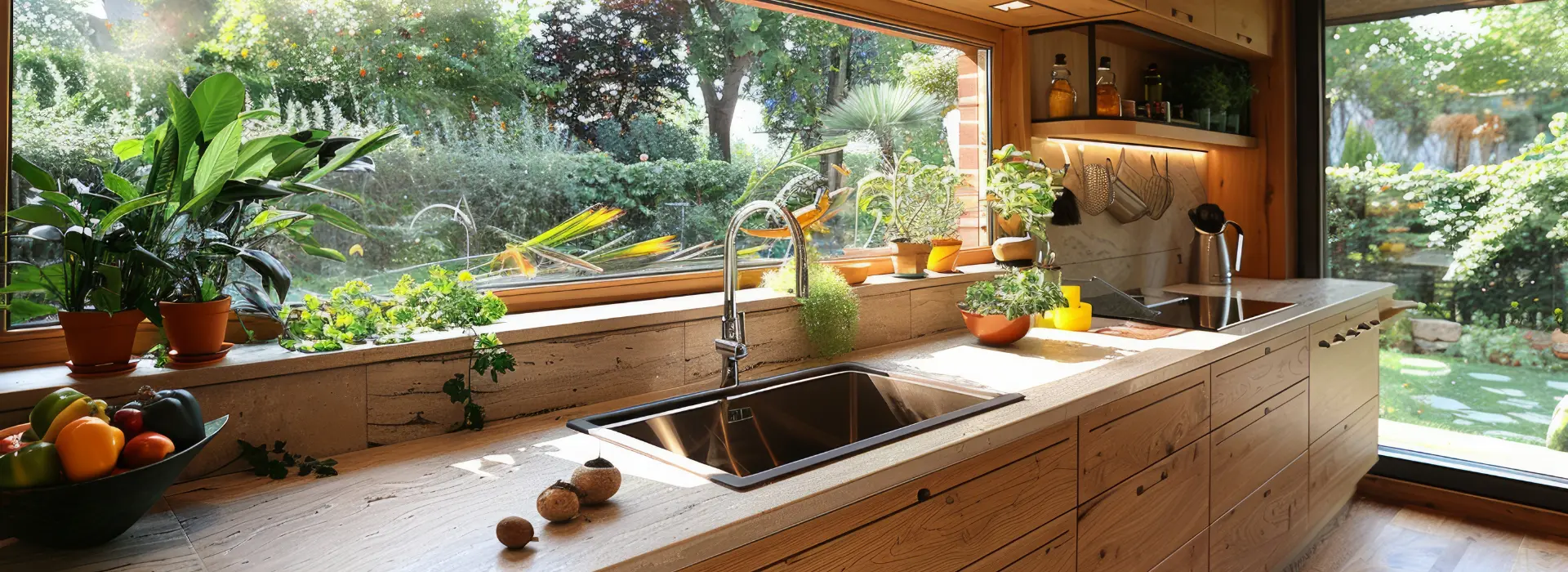
Best Sink Shapes and Sizes for Small Kitchens in 2025
Let’s talk about small kitchens. Not the Pinterest-perfect kind with hidden drawers and fancy pot fillers
by Sooraj T. Mathews
Aug 07, 2025
4 minute read
I mean real-life, limited-counter-space, where-do-I-put-this-dish kind of kitchens. If you’ve cooked in one, you know exactly how it feels. You have to be deliberate about every choice. Every appliance, shelf, and yes — even the sink.
Honestly, the kitchen sink might be one of the most overlooked decisions during a remodel. People think of backsplashes and countertops first, but the sink? It’s where most of your kitchen mess begins and ends. And if you're short on space, picking the wrong size or shape can make everything feel tighter than it already is.
The good news? You’ve got options. Especially now in 2025, manufacturers are finally getting that not every home has a wide-open kitchen island and endless counter space. There are actually some well-designed, space-saving sinks made for kitchens like yours.
Let’s dig into what works — and what to skip.
Table of Contents
- Why Sink Size (and Shape) Actually Matter in a Small Kitchen
- Sink Shapes That Make Sense (And Why)
- What’s the Ideal Size for a Small Kitchen Sink?
- Designs That Save More Than Just Space
- Single Bowl vs. Double Bowl – Which One Wins?
- Material Talk: What’s Actually Worth It?
- Easy Ways to Get More from the Area Around the Sink
- 2025 Trends: What’s Showing Up in Smart Kitchens
- Real Talk to Wrap This Up
Why Sink Size (and Shape) Actually Matter in a Small Kitchen
You might not realize it until you’ve lived with a bad one, but your sink affects everything. It's the hub. You rinse veggies there. Soak pans. Dump leftovers. Sometimes it becomes your extra counter during chaos — we’ve all done it.
In small kitchens, where space is at a premium, the sink can either help or hurt. If it’s too big, it swallows up valuable counter. Too small, and you’re constantly bumping into its limitations. Then there’s depth — go too shallow and you’ll have splashback with every rinse. Go too deep and say goodbye to storage underneath.
Also, it's not just what’s above the counter. Under the sink matters too. Think trash bin placement, plumbing room, cleaning supply storage. A bulky, poorly planned sink will jam that all up.
The right size and shape doesn't just look better — it actually works better. It frees up inches. And in a small kitchen, inches matter.
Sink Shapes That Make Sense (And Why)
1. The Good Old Single Bowl Sink
You want a sink that just works? Go single bowl.
It gives you more usable room inside the basin, even if the overall size is modest. No divider means you’re not awkwardly trying to fit a sheet pan into one side. And it’s easier to clean. Fewer edges, fewer spots for grime.
You do lose the ability to multitask — like soak on one side, rinse on the other. But in a small kitchen? Most people aren’t doing all that at once anyway.
Best for: pretty much everyone working with limited space who wants things simple.
2. Corner Sinks (Yes, Really)
This one throws people off at first. But if your kitchen has a corner that just... isn’t doing much? You might be able to put a sink there.
It frees up the rest of your countertop for prep work. You might need a plumber who knows what they’re doing, and you’ll lose the traditional under-sink cabinet, but it can be a surprisingly smart layout hack.
Best for: L-shaped kitchens or weirdly shaped layouts that leave corners unused.
3. D-Shaped Sinks
Flat in the back, rounded at the front. The shape seems simple, but it works. That curve in the front makes it a bit more compact, while the flat back keeps it flush against the wall.
You’ll see these more in modern remodels — not flashy, just practical.
Best for: shallow counters where you don’t want the sink sticking out too far.
4. Rectangular and Narrow Sinks
These are long and lean — wide enough to do real work but not too deep. They’re easy to fit with minimalist hardware like wall-mounted faucets, which frees up counter space even more.
If your kitchen has a galley-style layout or one continuous counter run, this shape is worth considering.
Best for: galley kitchens, straight-run counters, or homes with modern taste.
What’s the Ideal Size for a Small Kitchen Sink?
You’ve got some wiggle room, but most small kitchen sinks fall within a sweet spot. Here’s what usually works:
- Width: Between 22 to 25 inches. Anything bigger starts pushing into your prep area. Anything smaller feels cramped.
- Depth: Somewhere in the 7 to 9-inch range. Deeper means fewer splashes. Shallower gives you more space below.
- Cabinet fit: Double-check the cabinet your sink’s going in. Most standard base cabinets are 24 to 30 inches wide.
This sounds technical, but if you eyeball it, you’ll end up with regrets. Take a few measurements — future you will appreciate it.
Designs That Save More Than Just Space
Sometimes it's not about shape or size — it's about the whole design. Some sinks are built to multitask. That’s exactly what you need when counter space is limited.
Undermount Sinks
Clean. Seamless. No rim sitting on top of the counter. Plus, you can push crumbs and spills directly into the basin without anything getting in the way.
Just note: installation can be trickier, especially if your countertop isn’t stone or quartz.
Drop-In Sinks
These are your traditional top-mount sinks. They’re easy to install and more forgiving on the budget. You’ll lose a little counter space to the rim, but for many small kitchens, the ease is worth it.
Workstation Sinks
These are game-changers. A built-in ledge supports accessories like drying racks, colanders, and cutting boards — all designed to rest securely over the sink and be easily moved or swapped as needed.
You prep over the basin. Rinse veggies, chop, drain pasta — without ever moving away.
Compact Farmhouse Sinks
Yes, apron-front sinks can work in small kitchens. Brands are now making them in 24" versions that give you that classic farmhouse look without overwhelming your space.
Single Bowl vs. Double Bowl – Which One Wins?
Let’s keep this short.
Double bowls give you two separate zones. Good for multitasking. Not so great for washing big stuff.
Single bowls offer one open basin. Easier to clean. Less visual clutter. Fits more.
In small kitchens, single usually makes more sense. Less dividing, more doing.
Material Talk: What’s Actually Worth It?
Once you know the shape and size, the next big choice is material. Here's what tends to work well in smaller kitchens:
Stainless Steel
It’s not fancy, but it works. Lightweight, doesn’t stain easily, and bounces light around — which helps make tight kitchens feel less closed in.
Fireclay
This is the traditional, glossy ceramic sink. It’s pretty and tough, but heavy. If you want that vintage or farmhouse vibe and your cabinets can handle the weight, it’s a good choice.
Composite Granite
Sleek, solid-feeling, and comes in muted tones like grey, black, or earthy beige. These resist scratching better than you’d expect. Also quieter when you toss something in the sink — stainless can be loud.
Easy Ways to Get More from the Area Around the Sink
The sink is just part of the equation. Here’s how to get more out of the zone around it:
- Use an over-the-sink rack. Cutting board, drying rack, strainer — grab a set that fits your basin.
- Install a wall-mounted faucet. It clears counter clutter and makes the whole setup look less cramped.
- Float a shelf or two above. Open shelves for mugs, soap, or even a plant? Adds style and function.
- Pull-out bins below. That cabinet under the sink? Don’t let it become a black hole.
2025 Trends: What’s Showing Up in Smart Kitchens
- Slim sinks with built-in extras: Integrated soap holders, colanders — convenience without the bulk.
- Matte finishes: Matte black, soft white, and greys are trending and practical.
- Modular accessories: Moveable tools designed for over-the-sink use.
- Eco-minded materials: Think recycled content and lower water waste.
Real Talk to Wrap This Up
A great kitchen doesn’t have to be large. You just need to make smarter choices.
And honestly? The sink is one of those places where a small upgrade makes a huge difference. It touches almost every part of your kitchen routine. Prep. Clean. Reset.
Pick the right size. Choose a sink shape that works naturally with your kitchen’s layout instead of competing with it. Use the space around it wisely. That’s it. Doesn’t have to be complicated.
Just practical.
-min (1).png)
Sooraj T. Mathews
Sooraj is a content creator with 5 years of experience and a knack for making SEO work feel like storytelling. With 4 years in the digital marketing game, he blends strategy and creativity to craft content that clicks and converts. Outside of work, you'll find him unwinding with a good puzzle or getting lost in a great book—always curious, always learning.
.webp)
.webp)
.webp)
.webp)
.webp)
.webp)
.webp)