
.webp)
How to Choose the Perfect Bathroom Faucet for Your Sink Style
It’s strange how picking a bathroom faucet turns into a whole thing. You wouldn’t expect it. You look at your sink, think “I just need a faucet,” and then suddenly you’re faced with more choices...
by Sooraj T. Mathews
Apr 08, 2026
4 minute read
Table of Contents
- 1. Figuring Out the Sink
- 2. Configurations
- 3. Height & Reach
- 4. Style
- 5. Materials
- 6. Finishes
- 7. Water Flow
- 8. Installation quirks
- 9. Quick sanity checklist
...than you even knew existed. I’ve watched people go in confident and come out confused, carrying a box that ends up being the wrong size anyway.
And honestly, half the issue is that you don’t realize your sink already made most of the decisions for you. The faucet is kind of the second act here — the sink is the one running the show. Once you get that part straight, the rest doesn’t feel as overwhelming.
Anyway, here’s how I’d talk through it if someone asked me in person, not in a showroom.
1. Figuring Out the Sink (the part people skip, then regret later)
Most folks jump ahead to finishes or handle styles, but the sink type matters way more. It sets the boundaries.
Drop-In / Top-Mount
Drop-in sinks… yeah, these are the easy ones. They sit right on top and don’t argue with you too much. They take centerset, widespread, whatever matches the holes. Not picky.
Undermount
These look cleaner — the kind of sink people point to when they want their bathroom to feel “updated.” But because the faucet mounts on the counter, not the sink, what’s already drilled is what you’re stuck with. Usually single-hole or widespread looks right. Anything else feels cramped or mismatched.
Pedestal
Pedestal sinks have personality, but almost no space. You can’t put a giant faucet on them. A single-handle faucet or tight 4-inch centerset is about as far as you can go before it looks crowded.
Vessel
Those bowl-on-the-counter sinks? They’re dramatic, but they demand a tall faucet or something from the wall. Too short, and the water just hits the wrong spot or splashes out like it’s trying to escape the sink entirely.
If you stop here and just accept whatever the sink type is, you save yourself a lot of back-and-forth later.
2. Configurations (the uninteresting part that actually matters)
Not the fun part, but this is where most wrong purchases happen.
Single-Hole
Just one opening. Usually one handle. Feels clean and straightforward.
Centerset (4-inch)
Three holes close together. You’ve seen these a thousand times. Classic bathroom layouts tend to use this.
Widespread (8-inch)
Three holes but spaced wider. This always looks a bit more “grown-up,” I guess — more breathing room around the handles.
Wall-Mounted
This one’s a bit of a commitment because you need the plumbing behind the wall in the right spot. But it looks good with vessel sinks or if you want more counter space.
Quick stuff to glance at
Just literally:
- · How many holes?
- · How far apart?
- · Anything behind the faucet that might block the handles?
- · Backsplash too close?
- · Counter too thick?
Most people don’t check, and that’s how a return trip to the store happens.
3. Height & Reach
I think this is the part nobody warns you about. The faucet might look great in the box and still feel awkward once it’s in use.
Height
Tall faucets are great if your sink can handle it. Deeper sinks or vessel sinks, no problem. But tall faucets + shallow sinks = splash zone.
Shorter faucets feel calmer. More contained.
Reach
This is the one detail people regret skipping. A faucet should send water to somewhere near the center of the bowl. Not at the front lip where you’re basically washing your hands over the counter. Not pushed against the back wall. Right near the center — it’s the sweet spot.
4. Style
Once the plumbing basics line up, you get to pick the vibe.
Modern
Minimal lines, matte black, brushed steel, chrome. Usually single-hole looks cleanest here.
Traditional
Curves, brushed nickel, soft shapes. Widespread faucets seem to balance traditional bathrooms better than anything else.
Industrial
Heavier metal, more exposed. Black and steel. Kind of a “don’t overthink it” style — you either like it or you don’t.
Don’t stress over this part. You usually know what feels right as soon as you see it.
5. Materials (the part no one sees but makes a big difference)
The outside is style. The inside is longevity.
Brass
Strong, reliable, long-lasting. Usually the top tier for durability.
Stainless Steel
Also strong. Rust-resistant. A comfortable middle option that doesn’t give you surprises.
Zinc
Fine for light-use bathrooms or quick fixes. Won’t last as long, but it does the job if expectations are realistic.
6. Finishes (basically how much you’re willing to wipe fingerprints)
This is where everyday use matters.
Chrome
Bright, sharp — and smudge-happy.
Brushed Nickel
Low maintenance, low drama. Blends in with pretty much anything.
Matte Black
Modern, bold. Just be gentle with the cleaning cloth.
Brass / Gold
Warm, a bit luxurious, works best when the rest of the bathroom has matching tones.
7. Water Flow (quick check, tiny commitment)
You won’t spend long here:
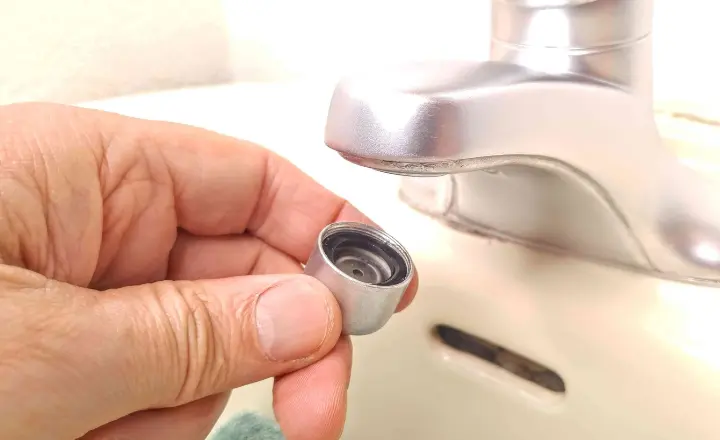
- · Aerators reduce splashing
- · WaterSense certification saves water
- · 1.2 GPM is standard for efficiency
Nothing tricky. Just useful.
8. Installation quirks (small, but they matter)
Nobody talks about these until it becomes a problem:
- · Do the handles hit the backsplash?
- · Does the faucet base even sit flat?
- · Are your supply lines in a weird spot?
- · Enough space behind the faucet for movement?
A few seconds spent checking this saves a whole afternoon later.
9. Quick sanity checklist
Right before buying, ask yourself:
- · Sink type match?
- · Hole spacing match?
- · Height and reach make sense?
- · Finish fit the room?
- · Material durable enough?
- · Does the faucet feel right when you picture it installed?
If yes → you’re fine. Keep going.
Final note — nothing fancy
A faucet shouldn’t be dramatic. It’s a simple part of the bathroom, but it becomes complicated when you ignore the sink or assume everything fits everything. Once you line up the basics — sink first, then configuration, then everything else — the choice gets easier. And the faucet ends up being something you barely think about, which is honestly the ideal outcome.
-min (1).png)
Sooraj T. Mathews
Sooraj is a content creator with 5 years of experience and a knack for making SEO work feel like storytelling. With 4 years in the digital marketing game, he blends strategy and creativity to craft content that clicks and converts. Outside of work, you'll find him unwinding with a good puzzle or getting lost in a great book—always curious, always learning.
.webp)
.webp)
.webp)
.webp)
.webp)
.webp)
.webp)