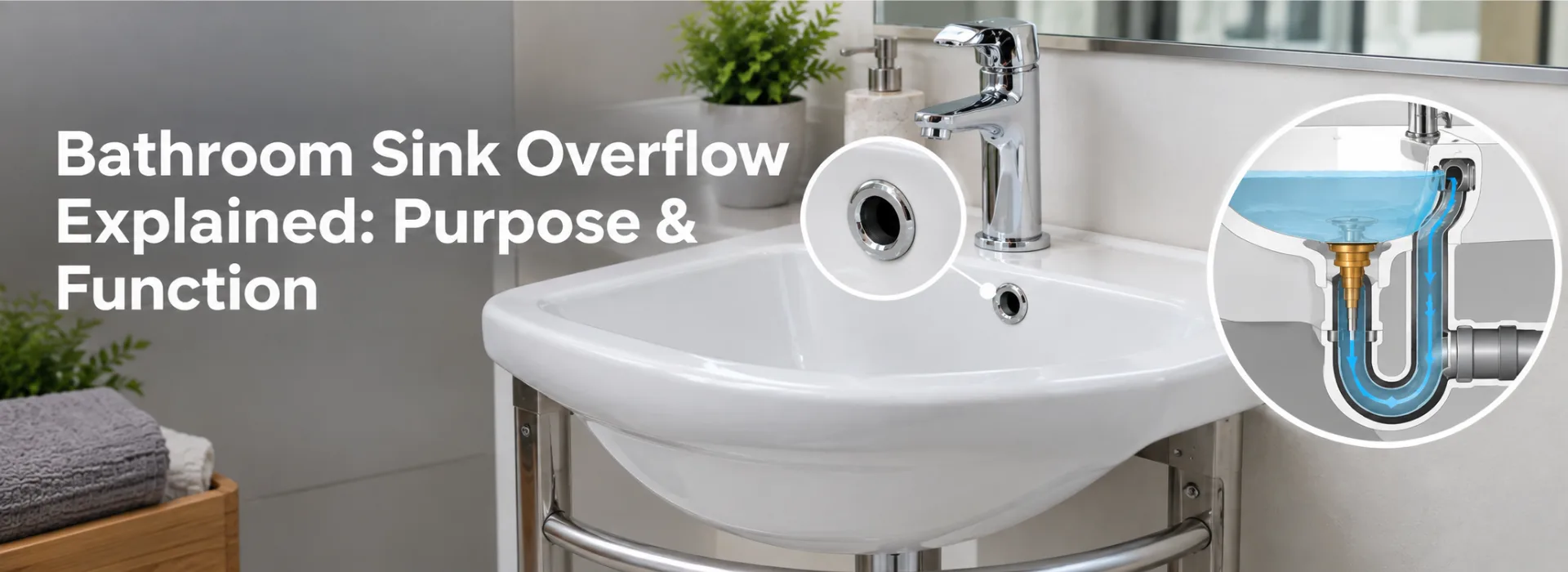
Bathroom Sink Overflow Explained: Purpose & Function
A bathroom sink overflow is the small opening near the upper inside wall of the sink bowl. When water rises too high, some of it can slip into that opening and move toward the drain instead of running over the rim. It also lets a bit of air into the drain area, which can help water move out more smoothly. It’s a simple but essential feature for both safety and performance.
by Sooraj T. Mathews
Sep 30, 2026
12 minute read
That Small Hole Near the Top of the Sink
Most bathroom sinks have that little hole near the top of the bowl.
You see it. You wipe around it. Maybe you notice it looks a little dark inside sometimes. Then you forget about it again.
That little opening is the bathroom sink overflow.
It usually sits high inside the basin, just under the rim. Sometimes it is round. Sometimes it is more like a narrow slot. Some sinks have a small trim piece around it. Some just have the plain ceramic opening.
It is not there for looks. Behind that hole is a small passage built into the sink body. You cannot see the passage from the outside, which is probably why people don’t think about it much. When water rises high enough, it enters the overflow hole, moves through that hidden channel, and heads down toward the drain area.
The overflow hole is designed to redirect excess water safely into the drain system. In normal words, it gives rising water somewhere to go before it spills over the edge.
And yes, that matters.
A bathroom sink is not used in some careful, perfect way every time. The stopper gets left down. The faucet runs while someone turns away. A drain has been slow for a week, but it still drains eventually, so nobody touches it. A child plays with the water. A guest does not notice the bowl filling.
Normal stuff.
The overflow exists because small mistakes happen around sinks.
It does not make the sink impossible to overflow. One small hole can only do so much. If the faucet is running hard and the main drain is badly blocked, it may not keep up.
Still, it helps.
Sometimes it gives you enough time to notice the water rising. Sometimes it keeps the water from reaching the rim. Sometimes it just means less water to clean up afterward.
Not exciting. Useful, though.
What Happens Inside the Sink
The way a sink overflow works is plain once you picture it.
Say the drain stopper is closed. The faucet is running. Water starts filling the basin. At first, nothing seems wrong. Then the level climbs. If nobody turns off the faucet, the water eventually reaches the opening near the top of the sink.
Once it reaches that hole, some of the water goes in.
From there, it travels through the hidden channel inside the sink. Then it joins the drain assembly below and leaves through the same waste line as the regular sink water.
No valve. No little flap. No moving part. Just a path.
Water rises, finds the opening, and moves through it. That is how sink overflow works in normal terms.
There is another thing happening too, and it is easy to miss because people mostly think about water. At the same time, the overflow allows air into the drain, improving water flow.
Air sounds like nothing.
But drains can be fussy. When water moves through a drain, air needs to move too. If the drain cannot breathe well, water may leave slowly, unevenly, or with that gulping sound people sometimes hear.
A clear overflow hole can help with that.
Not in some dramatic way. If the P-trap is packed with hair and soap paste, this little opening is not going to save it. Same with a drain body full of old toothpaste buildup. A clog still has to be cleaned.
But when the drain is mostly fine, it gives the system a bit of help.
Why the Overflow Hole Matters
The main sink overflow hole purpose is spill control.
If water keeps running while the drain is closed, the basin fills. Without an overflow, the water eventually comes over the rim. With one, some of that water is carried into the drain before it reaches the top.
Not all of it every time.
That depends on faucet pressure, the size of the opening, and whether the drain is clear. So it is better to think of it as a backup, not a guarantee.
Still, backup matters around a bathroom vanity.
Water does not always stay where you first see it. It runs under the faucet base. It slides toward the back edge. It gets into seams. It drips into the cabinet. You wipe the countertop and think everything is fine, but a little moisture may still be sitting somewhere hidden.
Later, there is swelling, peeling or that damp smell under the sink that never feels good.
Usually not from one splash. Repeated moisture is the problem. Small leaks, small spills, small damp spots. They add up quietly.
That is where this small feature earns its place. It gives the sink a little forgiveness.
There is also the drainage side. Because it lets air into the drain area, the sink may drain more smoothly when everything is clean. Most people do not notice that when the sink is working well.
You notice plumbing most when it starts acting up.
Slow drain. Odd smell. Water sitting longer than it should. Then suddenly every small part looks suspicious, including that little hole near the top.
Sink With Overflow or Without One
Most standard bathroom sinks have an overflow.
Pedestal sinks usually do. Wall-mount sinks often do. Drop-in and undermount sinks often do too. That is why people sometimes assume every bathroom sink comes with one.
Not true.
Some vessel sinks skip it. Certain minimalist sinks do the same. Usually, it is for appearance. A bowl without that extra hole looks smoother. Cleaner. Less interrupted.
And yes, it can look good.
A sink without overflow is not automatically a bad sink. It just needs more attention.
If the drain is closed and the faucet keeps running, there is no hidden backup route. The water rises until it spills over. That is not a defect. That is just how that sink is made.
A sink with overflow is more forgiving. A sink without it may look cleaner, but it leaves less room for mistakes.
For a small powder room, a no-overflow vessel sink may be fine. If the sink is only used for quick handwashing, maybe the missing opening never becomes a problem.
For a main bathroom, I would think harder.
Main bathrooms get used in rushed, half-awake, messy ways. Toothpaste. Shaving. Face washing. Handwashing. Cleaning small things in the sink. The stopper gets pushed down and forgotten. The drain slows down. Someone walks away for a moment.
A kid’s bathroom? I would want the backup.
A rental bathroom? Same.
A guest bath? Probably.
Choosing between them depends on design preference and safety needs, but daily use should matter more than people think.
And then there is the drain assembly.
This is the boring part people skip.
A sink with overflow usually needs a drain made for overflow. A sink without overflow needs a non-overflow drain. They can look similar in product photos, which is where mistakes happen.
Wrong drain, wrong sink, and now you are dealing with leaks or weak draining.
So check before buying or installing a sink.
Boring advice. Good advice.
The Overflow Can Get Dirty
This is the part people forget until the sink smells.
The overflow channel can collect grime.
The sink bowl may look clean. The faucet may be wiped down. The drain stopper may look fine. But inside that hidden passage, residue can sit there for months.
Overflow holes are often overlooked during cleaning.
Soap gets in there. Toothpaste does too. Shaving cream, hard water minerals, dust, and regular bathroom grime collect little by little. The channel stays damp, and damp hidden places are good at holding odor.
So if the bathroom sink smells strange, do not blame the bottom drain too quickly.
It might be the P-trap.
It might be buildup around the stopper.
It might be a dirty drain pipe.
But it might be that small hole near the top.
That is why someone can pour cleaner down the main drain and still get a sour smell later. They cleaned the wrong opening.
A few signs are worth noticing. A musty smell near the upper part of the basin. Dark residue around the hole. A sour smell after running water. Water entering the opening slowly when the basin fills.
Usually, this is not a big repair issue.
It is just dirt in a hidden place.
Still unpleasant. But fixable.
Cleaning the Bathroom Sink Overflow
Cleaning a bathroom sink overflow is a little clumsy, but not hard.
Start with warm water. Pour it slowly into the opening. Hot tap water is enough. I would skip boiling water. It is unnecessary, and some drain parts or seals do not need that kind of heat.
Warm water helps soften the buildup inside the passage.
Then use baking soda.
Getting baking soda into that small hole is awkward. A little funnel helps. A folded piece of paper works too. Some of it may spill.
Fine.
Just get some into the opening.
Then pour in vinegar.
It will fizz. Let it sit for a few minutes. That fizzing helps loosen old soap film and grime. It will not scrub the whole hidden channel by itself, but it helps.
After that, use a small brush or pipe cleaner.
A straw brush is useful if it fits. Push it in gently and move it around. Do not force it. You are not trying to clear a buried pipe blockage. You are just loosening buildup around the opening and inside the channel.
Flush it again with hot water.
If the smell is still there, repeat the process. Old buildup can be stubborn, especially if this spot has not been cleaned in years.
Regular cleaning prevents odor and blockage.
Once a month is reasonable for a sink used every day. If that feels too scheduled, just clean it whenever you deep clean the bathroom. The main thing is not to forget it forever.
That is usually when the smell starts.
Do All Sinks Have Overflow Holes?
Not all of them.
Most standard bathroom sinks do have overflow holes, so people assume it is automatic. But then you get into vessel sinks and modern bowl-style sinks, and it changes. Some of those do not have one at all.
Kitchen sinks are different too. They usually do not have this same bathroom-style overflow hole.
So before buying a new bathroom sink, check the bowl carefully. Look near the upper inside wall. A round hole, oval opening, or narrow slot usually means the sink has an overflow. If the basin is smooth all the way around, it probably does not.
Read the product details too, because photos can hide things.
And check the drain type while you are there. A bathroom sink overflow needs a compatible drain assembly. A sink without overflow needs a non-overflow drain.
Small detail. Annoying mistake if you miss it.
Is Sink Overflow Necessary?
Not every sink needs one.
Some bathroom sinks are designed without an overflow and work fine. So a sink without overflow is not automatically a bad choice.
For daily use, though, I would usually rather have one.
It gives rising water another path. It helps air move through the drain area. It lowers the chance of water spilling over because someone left the faucet running or forgot the stopper was closed.
That is enough reason in a busy bathroom.
Main bathroom? Yes, I would prefer it.
Child’s bathroom? Definitely.
Rental or guest bathroom? Probably yes.
A decorative powder room that barely gets used? Maybe not. If the look matters more and the sink is only used for quick handwashing, a no-overflow vessel sink may be fine.
Just know the tradeoff.
No overflow means no second path when water gets too high.
How to Tell If Your Sink Has an Overflow
Look inside the sink bowl near the top rim.
That is the quickest check.
Most overflow openings sit on the inner wall of the basin, often facing you. It may be round, oval, or shaped like a narrow horizontal slot.
If you see that opening, your sink has an overflow.
If the basin is smooth all around with no opening near the top, it probably does not.
You can also check the drain body under the sink, but most people do not need to. The visible opening usually tells you enough.
FAQs About Bathroom Sink Overflow
What happens if a sink has no overflow?
No backup route near the top. That is the main thing. If the faucet keeps running and the drain is closed, water can spill over the rim. A sink without overflow also needs a non-overflow drain, or the install can get annoying fast.
Can overflow holes get clogged?
Yes. Soap film, toothpaste, minerals, and bathroom grime can sit inside that hidden channel. You may not see much from the outside. Often the first clue is smell, especially after running water.
Does overflow affect drainage speed?
Sometimes. It lets a little air into the drain area, and that can help water leave the basin more smoothly. It will not clear a real clog, though. That is a different problem.
Should I clean the overflow hole regularly?
Yes, at least now and then. It does not need to become a whole project. If the sink gets used every day, clean that opening during deeper bathroom cleaning. Warm water, baking soda, vinegar, and a small brush usually do enough.
Final Thoughts
The bathroom sink overflow is easy to ignore.
Most days, it just sits near the top of the basin and does nothing obvious. Then the sink smells odd. Or water gets too high. Or you notice dark buildup around the hole.
That is usually when people finally pay attention to it.
It gives water another way into the drain. It helps the drain get a little air. And sometimes, it is the hidden spot causing odor when the sink looks clean.
So check it once in a while. Clean it when you clean the sink properly. If you are buying a new bathroom sink, check whether it has an overflow before choosing the drain.
A good sink does not need to make this feature obvious. It just needs it to work when the bowl gets too full, when the drain needs a little air, or when the bathroom gets used the way bathrooms actually get used. Quietly, in the background, which is probably where this little hole belongs.
-min (1).png)
Sooraj T. Mathews
Sooraj is a content creator with 6 years of experience and a knack for making SEO work feel like storytelling. With 4 years in the digital marketing game, he blends strategy and creativity to craft content that clicks and converts. Outside of work, you'll find him unwinding with a good puzzle or getting lost in a great book—always curious, always learning.
.webp)
.webp)
.webp)
.webp)