.webp)
What Causes a Sewer Smell in Bathroom Sinks? Complete Guide
Discover common causes of sewer smells from bathroom sinks, including drain buildup, dry P-traps, blocked vents, and simple ways to fix and prevent odors.
by Sooraj T. Mathews
Sep 23, 2026
4 minute read
Introduction
You walk into the bathroom to brush your teeth and stop cold. Something’s off. Not mildew, not old candles — it’s that gut-punch smell of raw sewage. You check the toilet. Fine. You lean toward the sink. There it is. And it’s there the next morning too. And the one after that.
Nine times out of ten this turns out to be something mundane. A small thing went wrong in the plumbing, probably something you haven’t touched in a long time. The frustrating part is that “mundane” doesn’t mean obvious — there are a handful of different things that cause this and they look identical from where you’re standing.
Below is what actually causes it and what works on each one. Not a watered-down overview — the real stuff.
What Is That Smell, Exactly
The drain system under your house is supposed to be a closed loop. Waste goes out, gases stay contained. That’s how it’s built. But waste breaking down produces hydrogen sulfide — the rotten egg smell — and methane, and a few other things you don’t want drifting up through your sink. When you’re smelling it, somewhere in that system there’s a gap. Maybe a small one. Gas doesn’t need much.
Where the gap is changes everything about how you fix it. So that’s what the rest of this is about.
Dry P-Trap
Check this first. It’s the most common cause and takes about 45 seconds to either confirm or cross off the list.
What a P-Trap Does
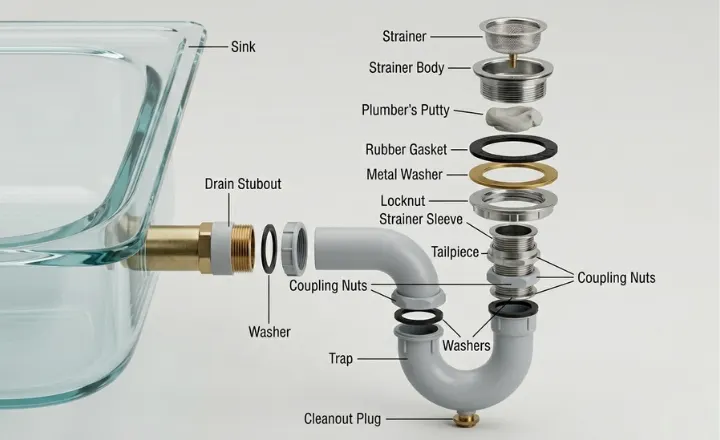
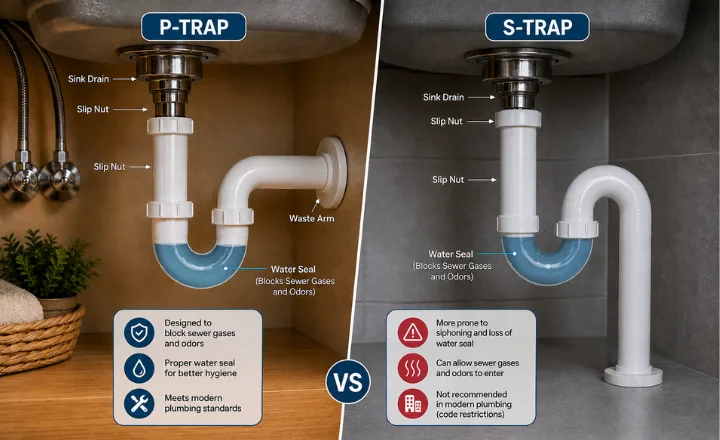
Look under the sink. There’s a curved section of pipe — dips down, comes back up, meets the wall. That curve holds a small amount of standing water all the time. Just sitting there. That water is the only thing between your bathroom air and the sewer gas below it. It’s not complicated. It just has to stay wet.
Why It Fails
It dries out. Guest bathrooms, basement sinks, any sink that goes unused for a few weeks — that standing water evaporates. Once it’s gone, there’s nothing left to block the gas. Dry climates make this happen faster. Some traps go dry in under two weeks. Others last a month. But leave a sink sitting long enough and you will get this.
Fix It
Run the tap for a minute. Water fills the curve back up, gas is blocked again, smell clears. That’s it. To stop it recurring, run the tap briefly in any sink you don’t use daily — 20 seconds once a week is plenty. Set phone reminder if you’re the type to forget. It works.
Buildup Inside the Drain
Separate issue from the trap. The trap could be full and working fine. The pipe itself is what’s causing it.
What Builds Up
Hair, mainly. Gets caught on the stopper or just inside the drain opening, and from there it acts like a net. Soap scum sticks to it. Toothpaste residue. Dead skin. Shaving gel. It layers up over months and the drain still works — water goes down, no obvious blockage — but there’s a growing clump of organic matter sitting in warmth and moisture and dark. It rots. Rotting organic matter in a drain smells like sewage. That’s the whole story.
What to Do
Take the stopper out — it usually unclips or unscrews. Whatever’s on it will probably be unpleasant. Clean it. Then half a cup of baking soda down the drain, half a cup of white vinegar behind it, wait 15 minutes while it fizzes, pour boiling water after.
If that helps but doesn’t finish it off, get a plastic drain snake — long strip, barbed teeth, a few dollars at any hardware shop. Feed it in, pull back slowly. What comes out of a drain that’s been “working fine” can be genuinely startling. Monthly maintenance. Five minutes. Prevents it from building up again.
Biofilm — The One People Miss
You cleaned it. Used the baking soda. Smelled better for two days, now it’s back. This is almost certainly why.
Biofilm isn’t loose debris you can fish out — it’s a thin bacterial layer that coats the inside walls of the pipe. The drain looks clean. Smells like nothing when you’re right up close. But there’s a living film in there, bacteria feeding on residue that’s bonded to the pipe surface, producing gas as a byproduct. Regular cleaning misses it entirely because you’re moving water through the pipe, not touching the walls.
Enzyme drain cleaner is the fix. Not the chemical foaming stuff — specifically enzyme cleaner, it’ll say so on the label. Pour it in before bed, don’t run the tap until morning. The enzymes break down the organic material the bacteria depend on. Without food, the bacteria die out. The smell stops returning. People who’ve been cleaning the same drain for months and getting nowhere usually find this sorts it in one go.
The Vent Pipe — Worth Knowing About
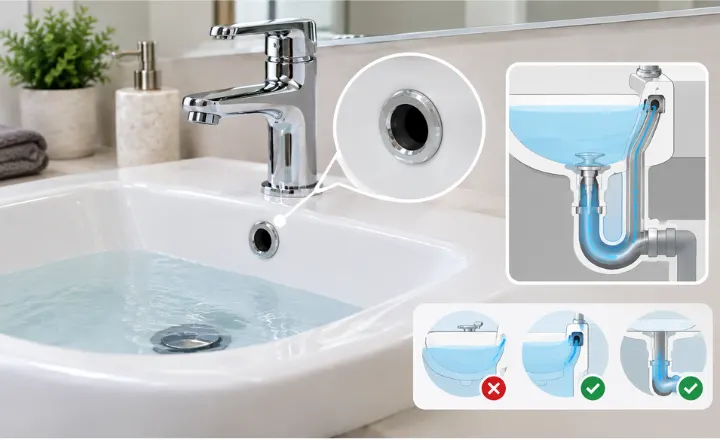
Most people don’t know this pipe exists. There’s a vent stack that runs from your drain lines straight up through the roof, open to outside air. Two jobs: lets sewer gas escape upward and out, and lets air back into the system so that water draining down doesn’t pull the water out of your P-traps through suction.
Block it — leaves, a bird’s nest, ice in winter, anything — and both of those jobs stop happening. Gas that used to exit through the roof now exits through whatever drain it can find. Air pressure in the pipes goes wrong, which pulls water out of traps you just refilled. You start noticing the drain gurgles when it empties. Your toilet might bubble when you run the sink. The smell comes and goes and you can’t figure out why because it isn’t connected to anything you’re doing.
If you’ve gone through everything else and nothing has fixed it, and especially if there’s gurgling involved or multiple fixtures acting strange at the same time, the vent is the likely answer. Clearing it requires getting on the roof. Not technically complicated but get a plumber if that’s not something you want to do.
Leaky Pipe or Loose Connection
Easy to miss because nothing seems wrong. The sink drains. No visible drips. But a crack in a drain pipe, a joint that was always a bit loose, a fitting that’s worked itself slightly open over years of use — water might not escape through something like that, but gas will.
It collects in the cabinet under the sink — enclosed space, so it builds up. You get a hit of it when you open the door, or it drifts out through the gaps where pipes pass through the back of the cabinet.
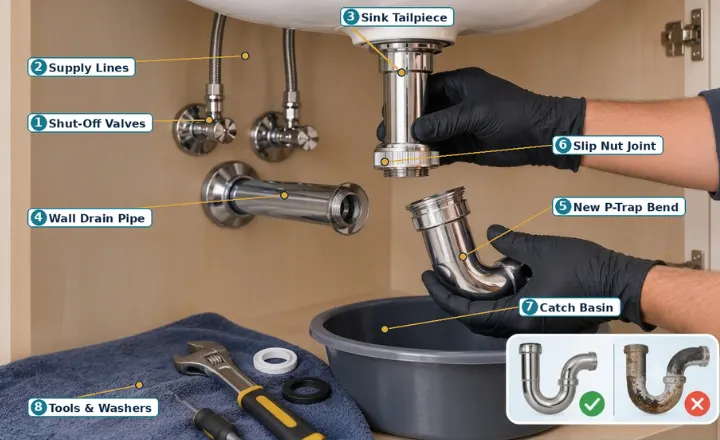
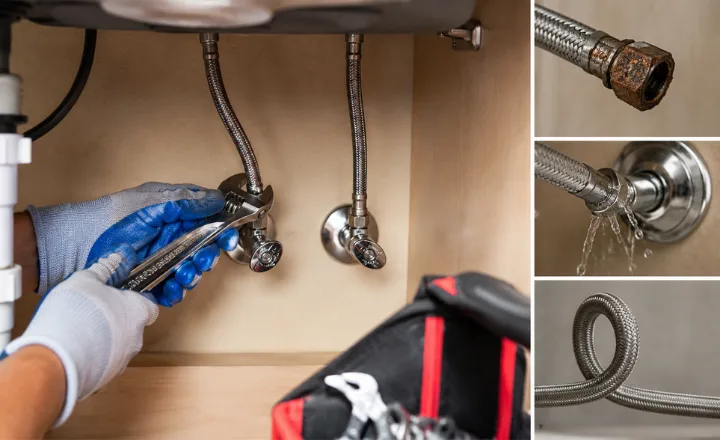
Get a torch, get under the sink, run the water. Check every joint. Moisture, mineral crust, discolouration, anything off. Run your fingers around connections while the water’s on and you’ll feel a damp joint before you see it. Find one and tighten it. Cracked or visibly corroded sections need replacing, but that pipe is cheap and the fittings are hand-tighten by design.
Poor Original Installation
Not glamorous but it happens more than you’d think. Connections never fully tightened, threaded joints with no tape, a fitting that was slightly wrong for the job and got used anyway. The sink works. Nothing drips. But there’s always been a gap at one particular joint that gas can get through.
If the smell has been there since you moved in, or turned up right after some plumbing work, start here. Torch, every joint, water running. Look for tape on threaded connections, check that compression fittings are actually seated. Same inspection as above, just with the expectation that something was wrong from day one.
Fixing Sewer Smell — Where to Start
Work through this in order. Most cases are done by step four.
-
Run the tap for a full minute — rules out a dry trap immediately
-
Remove and clean the stopper, clear around the drain opening
-
Baking soda and vinegar flush, 15 minutes, followed by boiling water
-
Enzyme drain cleaner left overnight — skip this step and the smell will keep coming back
-
Torch under the sink, water running — check every joint and fitting
-
Tighten loose connections; replace anything visibly cracked or corroded
Mistakes Worth Avoiding
-
Air freshener — covers it for an hour, changes nothing
-
Bleach or chemical drain cleaner used repeatedly — wears out pipe material and won’t touch biofilm
-
Cleaning the drain without running water after — the trap is still empty
-
Focusing only on the drain and never opening the cabinet to look at the pipes
When a Plumber Is Actually Needed
Most of this you can handle yourself. Call someone if:
-
You’ve gone through all of the above and nothing has changed
-
It’s not just one sink — multiple fixtures, the toilet, the shower are all involved
-
There’s gurgling, which points toward a vent problem
-
The floor near the vanity is soft, or there’s dampness or staining that shouldn’t be there
Finding a slow leak now versus a year from now is not the same repair bill.
Keeping It from Coming Back
-
Run every sink briefly once a week, especially any that don’t get daily use
-
Baking soda and hot water flush once a month
-
Drain strainer to stop hair getting in before it becomes a problem
-
No grease or oil down the bathroom sink
-
Empty house for more than two weeks? Pour a bit of cooking oil into each drain — it floats on the trap water and slows evaporation
Questions People Usually Have
Why does it still smell after I cleaned it?
A few possibilities. If you cleaned but didn’t run the water afterward, the trap is still empty — cleaning and refilling are two different things. Or the smell is biofilm further down the pipe that surface cleaning doesn’t touch. Or it’s not the drain at all, it’s a loose joint under the sink and you’ve been cleaning the wrong thing. Run the tap for a minute first and see if that changes anything — that tells you a lot.
Should I be worried about health effects?
For the typical stinky drain, not really — low-level occasional exposure is unpleasant, not dangerous. Hydrogen sulfide becomes a health concern at high concentrations sustained over time. If the smell is strong everywhere in the house, or you’ve been getting headaches you can’t explain, deal with it sooner and open some windows in the meantime.
How often do I need to clean the drain?
Once a month stops buildup from ever reaching the problem stage. Baking soda and hot water, two minutes. You don’t need to do anything elaborate — just don’t go six months without touching it.
Can I fix this myself?
Dry trap, drain buildup, biofilm, loose fittings — yes, all of it. No tools beyond a torch and a cheap drain snake. The exceptions are vent pipe problems and anything inside the walls, but those are less common causes.
Conclusion
Sewer smell from a bathroom sink is one of those problems that feels worse than it is. It’s not usually a plumbing emergency. It’s usually a dried-out trap, or six months of hair and soap sitting in the drain, or a biofilm layer that regular cleaning keeps missing, or a fitting under the sink that’s been slightly loose for years.
Run the water. Clean the drain properly. Try enzyme cleaner if it keeps coming back. Look under the sink with a torch. That sequence handles most of it. The smell doesn’t go away on its own — but it also doesn’t take much to make it stop.
-min (1).png)
Sooraj T. Mathews
Sooraj is a content creator with 6 years of experience and a knack for making SEO work feel like storytelling. With 4 years in the digital marketing game, he blends strategy and creativity to craft content that clicks and converts. Outside of work, you'll find him unwinding with a good puzzle or getting lost in a great book—always curious, always learning.
.webp)
.webp)
.webp)