How to Clean or Replace a Bathroom Sink Trap - Complete Guide
Learn how to clean or replace a bathroom sink trap with easy step-by-step instructions, essential tools, common troubleshooting tips, and practical maintenance advice.
by Sooraj T. Mathews
Sep 15, 2026
4 minute read
Introduction
It creeps up on you. Not in a dramatic way. More like—one day the sink just feels slower. You rinse something, watch the water sit there for a second longer than it used to. That’s it. Nothing urgent. Then it keeps happening.
You start noticing it more because now you’re looking for it. And somewhere in between all that, there’s a smell. Not constant. Just… there. Enough to make you wonder if something’s starting to go wrong.
Most people check the drain first. That’s the obvious place.
But the real issue usually sits lower, in that curved pipe underneath. You don’t see it unless you bend down and look, which is probably why it gets ignored for so long.
The trap. It holds everything that goes down—at least the stuff that doesn’t fully wash through. Hair, soap, bits of whatever else. Nothing unusual about that. It’s supposed to do that. It just doesn’t empty itself afterward.
And eventually, it fills enough to slow things down. Cleaning it fixes most cases. Replacing it handles the rest. Neither is as complicated as it feels before you start.
What That Pipe Actually Does (and why it matters more than it looks)
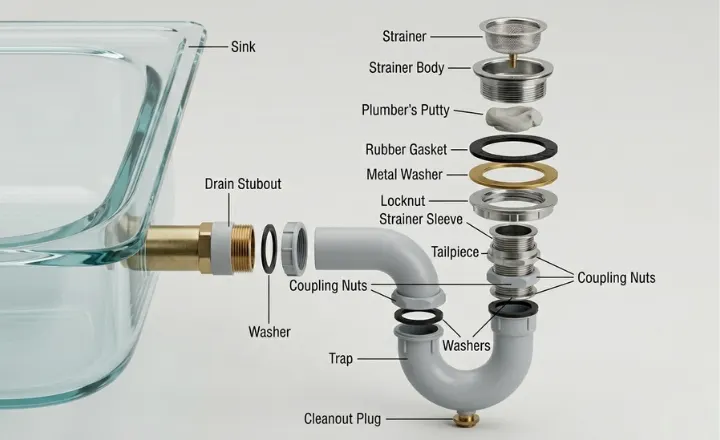
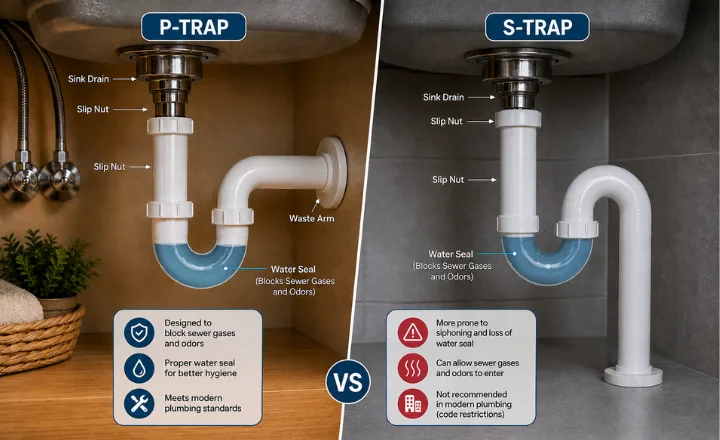
That bend under the sink isn’t random. It’s a P-trap. Named after the shape, nothing deeper than that.
It always holds a bit of water. That part matters more than the debris side of things, honestly. That water sits there acting like a barrier. Without it, gases from the sewer line would come straight back up.
You’d notice immediately. No guessing involved. At the same time, it catches debris. Which sounds helpful—and it is—but only until that space fills up enough to slow the flow.
So it’s doing something useful. And at some point, that usefulness turns into the reason you’re dealing with it. Kind of both at once.
When It Starts Acting Up
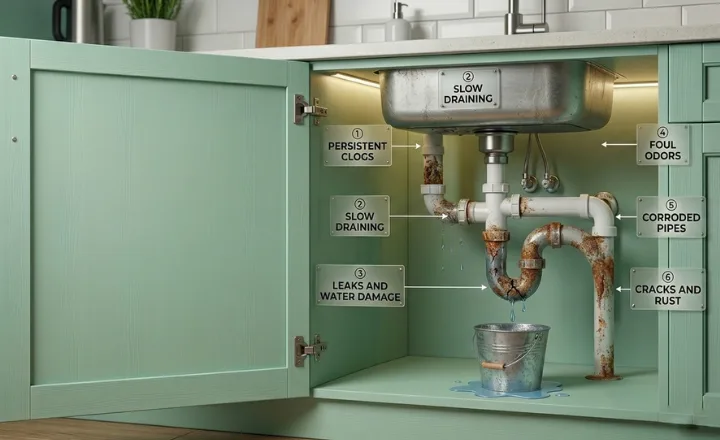
Here are common warning signs you should not ignore:
-
Water draining slower than it used to
-
A smell that lingers even after running water
-
Clogs that come back too quickly
-
Dampness under the sink that wasn’t there before
-
Buildup you can actually see if you look inside
Usually it’s not all at once. One thing shows up. Then another.
What You Actually Need Before You Touch It
Not much.
-
Bucket
-
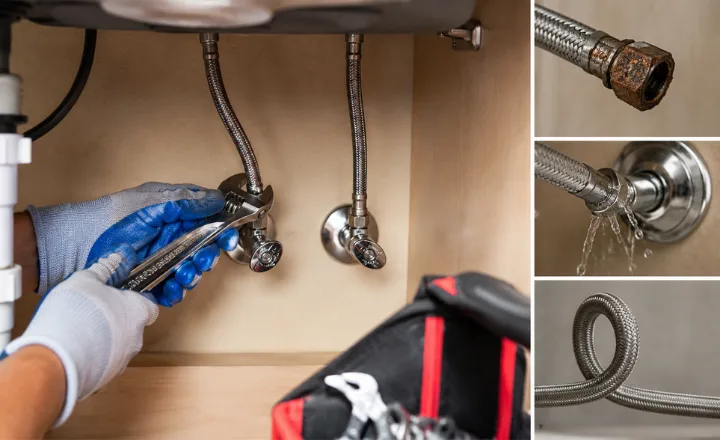
Adjustable wrench
-
Gloves
-
Something to scrub with
-
Replacement trap (if it comes to that)
-
Cloth
That bucket matters more than everything else here.
People assume the pipe is empty. It isn’t. Even if you haven’t used the sink in hours. There’s always water sitting inside the trap. Always.
Cleaning It (this is where most problems get solved)
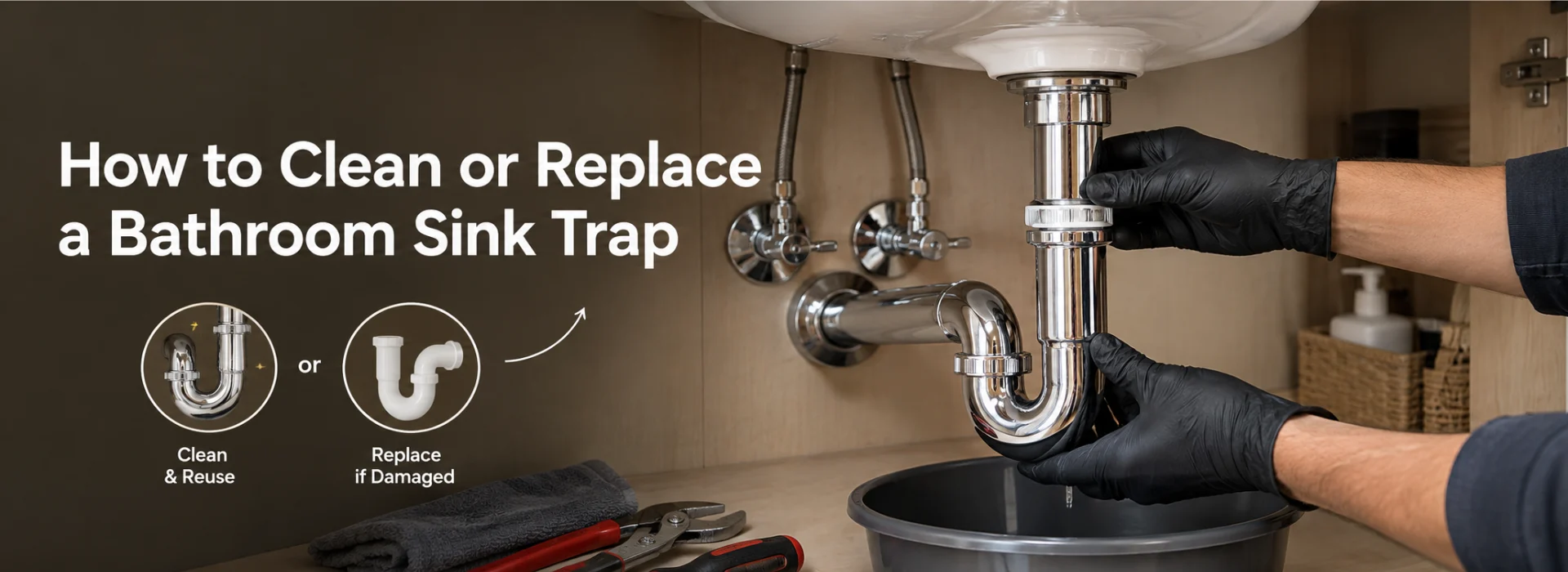
Start with the bucket. Not nearby—under the trap.
That’s one of those small details that feels unnecessary until it’s not.
Then loosen the connectors. Slowly. Counterclockwise. Usually by hand, sometimes with a wrench if they don’t move.
There’s a moment where it feels like you should just push harder. That’s usually when something cracks. So… don’t.
Once it loosens, the trap comes off pretty easily.
Hold it when you remove it. Tilt slightly. Let everything drain into the bucket. You’ll see what’s been sitting inside. No surprises, really. Still unpleasant. Then clean it.
Pull out the buildup first. Hair, mostly. Soap sticking to it. Sometimes it forms this thick layer that doesn’t rinse out unless you actually scrub it. So scrub it. Rinse. Then check again.
That “check again” part—people skip it. What looks clean usually isn’t fully clean the first time. Then you put it back. But not immediately—this is where people rush.
Line it up first. Then tighten. Hand-tight is usually enough. Maybe a slight turn more. That’s it. Turn the water on slowly after. Watch the connections. Wait a bit. Then check again. Leaks don’t always show up right away.
Replacing It (if cleaning didn’t really fix things)
If you clean it properly and the problem comes back… yeah, that’s usually a sign.
Replacement isn’t a completely separate process. It starts the same way—remove the old trap.
The part that matters more is choosing the new one.
It has to match. Not “close enough.” Not something you think will fit. It either matches or you end up forcing things, which leads to… more problems.
PVC is easier to handle. A bit forgiving. Stainless steel lasts longer but needs better alignment.
Both work. Just depends on how precise you want to be when installing.
Installation itself isn’t complicated. It’s just alignment. That’s really it. Set it in place. Adjust it until it sits naturally. Then tighten.
And again—tightening too much is where things go wrong. Especially with plastic. It doesn’t flex. It just cracks. Then same thing—run water, wait, check.
Where It Usually Goes Wrong
This part is predictable.
-
No bucket, or it’s slightly out of position
-
Tightening connections more than needed
-
Using a trap that doesn’t quite match
-
Assuming it’s fine without checking for leaks
None of these feel like big mistakes at the time. They just show up later.
When Cleaning Stops Being Enough
Sometimes you do everything right.
You clean it, reinstall it, and it works. For a bit. Then the issue comes back.
That’s usually not buildup anymore.
-
Small cracks in the pipe
-
Corrosion in older traps
-
Repeated clogging
-
Just age—five, maybe ten years
At that point, replacing it is less effort than dealing with it again.
Keeping It From Happening Again
This part is simple. Which is probably why it gets ignored.
-
Don’t pour grease down the drain
-
Use a strainer
-
Clean the trap once in a while instead of waiting
-
Run hot water through it occasionally
That’s it.
Nothing complicated. Just small things that keep buildup from turning into a problem again.
Quick Questions People Usually Have
How often should I clean it?
Every couple of months works. Sooner if water slows down. Waiting longer just makes the cleaning worse.
Can I clean it without removing it?
Not properly. Some debris might move, but most of it stays inside.
Is replacing it difficult?
Not really. Basic tools, some patience, and making sure everything lines up.
What’s the best type?
P-traps are standard. PVC is easier. Stainless steel lasts longer. Both work.
Conclusion
Most sink issues that feel bigger than they are usually come back to this one part.
The trap.
It builds up slowly. Then suddenly feels like it stopped working all at once.
Cleaning fixes most of it. Replacing handles the rest.
Regular cleaning and using a good-quality trap can keep your sink running smoothly for years. That’s really all it comes down to.
-min (1).png)
Sooraj T. Mathews
Sooraj is a content creator with 5 years of experience and a knack for making SEO work feel like storytelling. With 4 years in the digital marketing game, he blends strategy and creativity to craft content that clicks and converts. Outside of work, you'll find him unwinding with a good puzzle or getting lost in a great book—always curious, always learning.
.webp)
.webp)
.webp)