P-Trap vs S-Trap: Key Differences Explained
Understand the key differences between P-Trap and S-Trap plumbing, including their design, functionality, installation, and ideal applications.
by Sooraj T. Mathews
Sep 09, 2026
4 minute read
Most people don’t go under the sink unless something forces them to.
Which makes sense. It’s not exactly a place you check casually. You turn the tap, water goes down, job done. Until it doesn’t feel quite right. Not broken. Just… off.
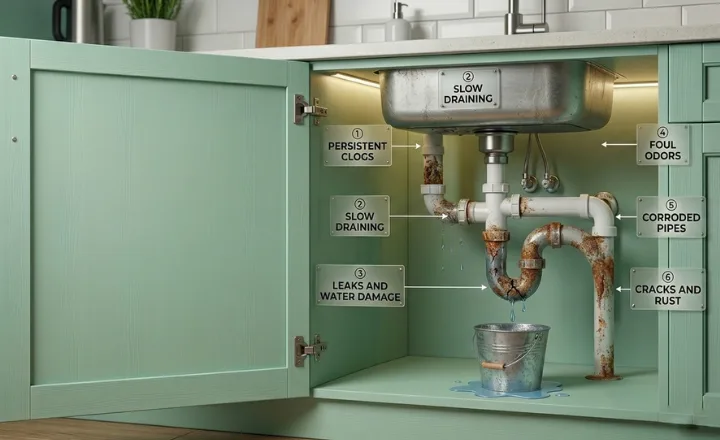
There’s that faint smell that shows up, disappears, then comes back later like nothing happened. Or the drain makes a sound it didn’t used to make. Kind of hollow. Not loud enough to panic, but enough to notice if you’re standing there.
And then you ignore it. Usually. Because what are you supposed to do with something that’s not fully a problem yet?
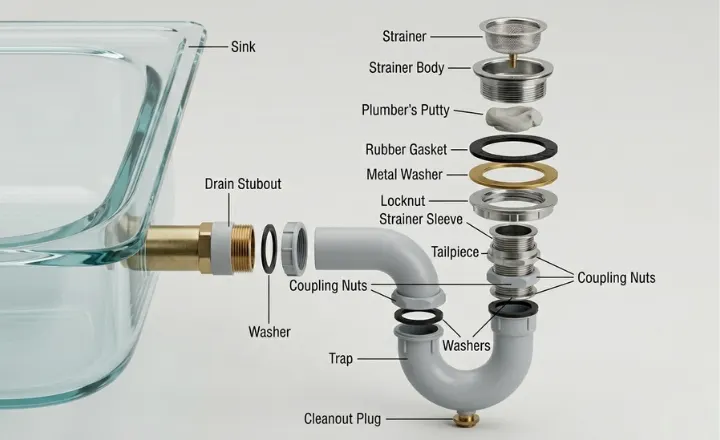
A lot of the time, though, it’s not the drain line far away causing it. It’s right there. Under the sink. That curved pipe that looks like it was bent just to fit the space. It wasn’t.
That bend is intentional. It’s doing something very specific, and when it stops doing it properly, everything starts feeling slightly wrong without anything clearly failing. That’s the trap.
What that curved pipe is actually doing
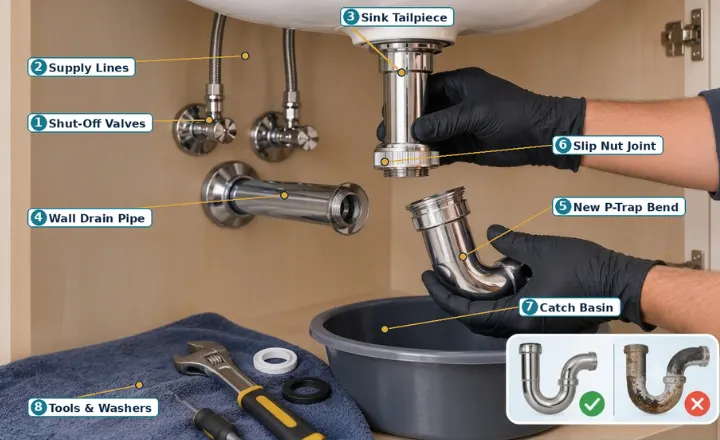
It helps to think about it without the name first. There’s a low point in that pipe where water collects. Not a lot, just enough to sit there after everything else drains out. You don’t see it, but it’s there.
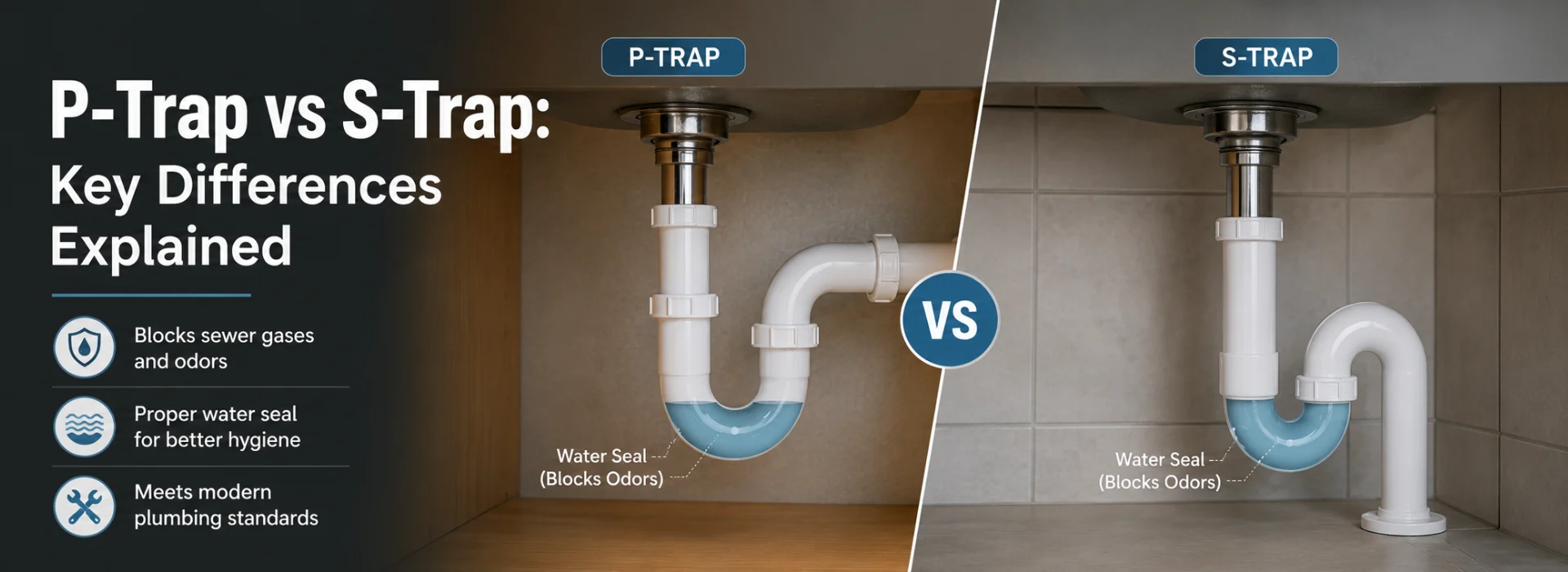
That small pool of water blocks air from coming back the other way. Not fresh air. Sewer air. The curved shape holds water, acting as a barrier against sewer gases. If that water stays, you don’t notice anything. If it doesn’t… you start noticing things you’d rather not. Smell, mostly. Sometimes sound. Occasionally both at once, which makes it harder to ignore.
This is where the two types show up
You’ll hear people say P-Trap or S-Trap like it’s just naming the shape. It is about the shape. But not in the way it sounds. Because the shape controls how water moves. And more importantly, how it leaves.
A P-Trap bends down and then goes toward the wall. That sideways part looks minor, but it changes how the water behaves right before it exits.
An S-Trap just keeps going down. No sideways turn. Straight into the floor.
That’s the difference. At least visually. It doesn’t feel like much. But it is.
The part people don’t see right away
Water doesn’t just flow through and disappear. There’s always a bit of movement behind it. Pressure shifts. Air getting pulled along. Small things, but they add up.
With a P-Trap, that sideways run seems to calm things down a little. The water leaves, but it doesn’t drag everything with it.
So some water stays behind. Not perfectly every time, but enough.
With an S-Trap, the drop is more direct. And when water moves fast enough, it can pull the rest of the water behind it. Not every time. That’s what makes it confusing.
But when it does happen, the trap empties more than it should. And once that happens, you don’t have that barrier anymore.
Why that matters more than it sounds
You don’t immediately connect a smell to a pipe losing a bit of water. It feels unrelated.
But that’s usually what’s happening. The seal breaks, even briefly, and gases come back up. Then maybe water runs again later and partially fixes it. So the problem feels inconsistent. That’s why people chase other causes first.
Cleaning the drain. Checking for buildup. Running chemicals through it. Sometimes those things help, sometimes they don’t.
Because the actual issue isn’t always buildup. It’s the trap not holding water the way it should.
The whole P-Trap vs S-Trap thing, simplified
If you strip it down:
- P-Trap water tends to stay where it should →
- S-Trap sometimes it doesn’t →
That’s really it.
Everything else—codes, installation differences, recommendations—comes from that one behavior.
You’ll still see S-Traps in older homes. They weren’t installed randomly. They made sense at the time, especially when floor drainage was more common.
But over time, the issues showed up. Not always immediately. Sometimes years later. That’s usually when standards start to change.
Why S-Traps are mostly phased out now
It comes back to that same point. If the trap can lose its water seal, even occasionally, it stops being reliable. Not completely broken. Just unreliable. And plumbing systems don’t do well with “sometimes.” Loss of water seal makes S?Traps unreliable and unsafe.
That’s why many plumbing codes don’t allow them anymore. It’s not about preference. It’s about removing something that doesn’t behave consistently under normal use.
So what should you actually use?
This part’s not complicated. P-Trap. It’s the standard now. Not just because it’s newer, but because it avoids that siphoning issue most of the time.
And “most of the time” is what you want here. Perfect doesn’t exist in plumbing, but consistent matters.
A P-Trap holds onto that small amount of water better. That’s the whole job.
If you already have an S-Trap
Then it depends. If everything seems fine, you might not feel the need to change it immediately. And that’s fair.
But if you’re noticing smells, or that uneven behavior we talked about earlier, it’s worth looking at.
Replacing it isn’t always straightforward. The pipe direction changes—from floor to wall—so some adjustment is usually needed. Sometimes small. Sometimes more involved.
It’s not something everyone wants to deal with themselves, which is why it often turns into a professional job. But once it’s done, the problem tends to stop showing up in those inconsistent ways.
Small things that still cause issues either way
Even with a P-Trap, things can go wrong. Misalignment, for example. Doesn’t take much.
Or low-quality parts that don’t seal properly. Slow leaks. Slight air gaps. Things you don’t notice immediately. And then there’s the simple one—dry traps.
If a sink isn’t used for a long time, the water inside can evaporate. Same result as siphoning, just slower. Running water occasionally fixes that. Simple, but easy to forget.
Maintenance (if you can call it that)
It’s not really maintenance in the usual sense. More like keeping things from being ignored too long.
Run water in sinks that don’t get used. Check underneath once in a while. If something smells off, don’t assume it’ll fix itself. Sometimes it does. Sometimes it doesn’t.
A few quick answers people usually look for
What’s the main difference between P-Trap and S-Trap?
Mostly how they handle water after it drains. P-Traps tend to keep the seal intact. S-Traps can lose it.
Why are S-Traps restricted in many places?
Because that loss of seal allows sewer gases back into the home. Not consistently, but often enough to be a problem.
Can you still use an S-Trap?
In older systems, yes. But it’s not what you’d install now.
How long does a P-Trap last?
Depends on material and use, but generally several years. They don’t fail suddenly —more gradual wear than anything.
And the short version of all this
Both traps are doing the same job. One just does it more consistently. That’s the difference that ends up mattering.
Choosing the right trap today can prevent costly plumbing issues tomorrow. And once it’s sorted, it goes back to being something you don’t think about at all. Which is probably the best outcome.
-min (1).png)
Sooraj T. Mathews
Sooraj is a content creator with 5 years of experience and a knack for making SEO work feel like storytelling. With 4 years in the digital marketing game, he blends strategy and creativity to craft content that clicks and converts. Outside of work, you'll find him unwinding with a good puzzle or getting lost in a great book—always curious, always learning.
.webp)
.webp)
.webp)