Wood Tank vs Ceramic High Tank Toilets: Which One Should You Choose?
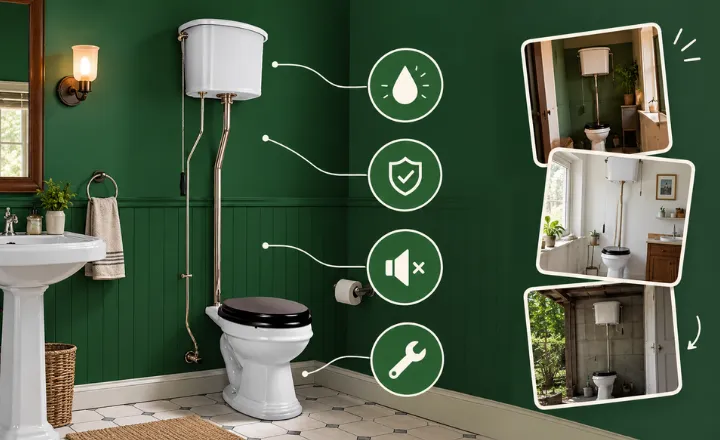
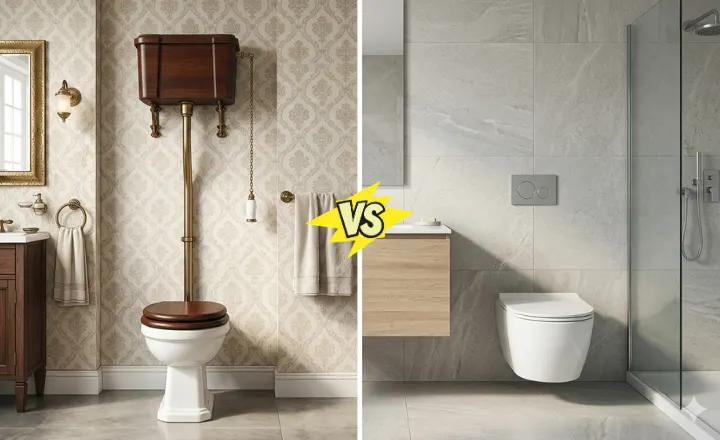
High tank pull-chain toilets are never subtle. The raised tank, exposed flush pipe, wall brackets, and hanging chain all stand out. That is a large part of their appeal.
by Sooraj T. Mathews
Nov 09, 2026
9 minute read

It's like traveling in time to a different era. This works well in Victorian, farmhouse, colonial, and traditionally styled bathrooms.
After deciding on a high tank toilet, many homeowners face the same question: should the tank be wood or ceramic?
Both options create a classic appearance, and both work in roughly the same way. The tank sits above the bowl, and water moves through the flush pipe when the chain is pulled. But the difference is real as the change in material changes the way we perceive the room. Wood looks warmer and more handcrafted. Ceramic looks cleaner and is usually easier to maintain.
What Is a Wooden Tank High Tank Toilet?
A wooden high tank toilet uses a raised wooden reservoir mounted above the bowl. It connects to the toilet through an exposed flush pipe and is operated with a pull chain.
This style is closely tied to late nineteenth-century and early twentieth-century bathrooms, when plumbing fixtures were commonly visible rather than hidden. The tank itself often looked like a small cabinet attached to the wall.
Wood tanks are usually made from hardwood or wood-based materials protected by a water-resistant finish. Oak is common. Darker stains may create the appearance of walnut, mahogany, or other traditional furniture woods.
People choose wood because it adds warmth to a room filled with tile, ceramic, metal, and glass. It can also coordinate with a vanity, mirror frame, door, shelving, or wall trim. It fits especially well in historic restorations and bathrooms designed around antique-style details.
What Is a Ceramic High Tank Toilet?
A ceramic high tank toilet uses the same elevated layout, but its tank is made from ceramic, usually glazed vitreous china.
Vitreous china is widely used for toilets and sinks because it performs well in wet rooms. Its glazed surface helps resist moisture, stains, and ordinary bathroom grime. It does not swell or warp in humid conditions.
Ceramic tanks are durable during normal use. They can chip or crack if hit hard, but that is uncommon once the tank is properly installed. Cleaning is also fairly simple. Dust and water marks can usually be removed with a soft cloth and a nonabrasive cleaner.
Ceramic high tank toilets work in traditional and vintage-inspired bathrooms, but they can also fit into newer spaces. Against subway tile, marble, or a plain painted wall, the high tank still looks distinctive while the material itself feels familiar.
This option often appeals to homeowners who want the pull-chain design without much extra maintenance.
Wood Tank vs Ceramic High Tank Toilets
The flushing function may be almost identical. The larger difference is how each tank looks, ages, and responds to bathroom conditions.
Wood has the stronger decorative presence. The grain, finish, and panel work are immediately visible. Ceramic is quieter. The raised position, pull chain, and exposed pipe still make a statement, but the tank blends more easily with other fixtures.
Moisture is the main practical difference. Ceramic naturally handles humidity. Wood relies more heavily on its protective finish. When that finish remains sound and leaks are repaired quickly, a wood tank can last for many years. It simply asks the owner to pay closer attention.
Appearance and Bathroom Style
A wood tank brings warmth and natural variation into the room. Dark finishes can feel formal and Victorian, while lighter oak often leans toward farmhouse, cottage, or colonial styling.
Raised panels and decorative trim make the tank resemble furniture. That works well with brass hardware, patterned tile, beadboard, floral wallpaper, antique-style faucets, or a clawfoot tub.
Ceramic creates a cleaner result. A white tank can match the bowl and sink, allowing the exposed plumbing and chain to provide most of the historical detail.
It also mixes more easily with newer materials. Ceramic can sit against subway tile, marble, simple flooring, or painted walls without making the room feel too heavy.
For a detailed period restoration, wood often looks more convincing. For a bathroom that mixes traditional and modern pieces, ceramic is usually easier to place.
Durability and Longevity
Both materials can last a long time when installed correctly.
Wood tanks are not especially fragile. Once mounted, they are rarely moved or struck. Their main weakness is repeated moisture exposure. If water gets beneath the protective coating, the wood may swell, discolor, crack, or separate at the joints.
Small leaks around fittings and pipe connections should be repaired early. A poorly ventilated bathroom can also be harder on wood.
Ceramic handles humidity better and does not warp under normal conditions. Its weakness is physical impact. A heavy tool, careless handling, or overtightened fitting may cause a chip or crack.
Ceramic isgenerally more predictable. Wood can last just as well, but it requires regular inspection and quick attention to leaks.
Maintenance Requirements
Wood tanks should be cleaned with a soft, slightly damp cloth and dried afterward. Bleach, abrasive powders, harsh sprays, and rough scrubbers may damage the finish.
The most useful habit is a quick inspection now and then. Check around the valve, pipe connection, seams, lower edges, and mounting hardware. Small signs of moisture should not be ignored.
Ceramic tanks are simpler. Mild soap or a nonabrasive bathroom cleaner is usually enough. A soft sponge or cloth can remove most marks.
Dust often gathers on top because the tank is mounted high and easily overlooked. Mold may appear around brackets or plumbing connections in a damp room, but that is usually a ventilation or leak issue rather than a problem with the ceramic.
Ceramic does not need polishing, sealing, or refinishing. That simplicity is one of its clearest advantages.
Installation Considerations
High tank toilets need more planning than standard toilets.
The tank must be attached to a strong part of the wall. Drywall alone is not sufficient. The installer may need to locate studs, add blocking, or use another approved support method.
The bowl, flush pipe, tank outlet, water supply, and brackets also have to line up correctly. Since the plumbing remains exposed, even a small alignment mistake can be noticeable.
Ceiling height should be measured before buying. Some systems include adjustable flush pipes, but they still have minimum and maximum installation ranges. Windows, mirrors, shelves, lights, and sloped ceilings may interfere.
Ceramic tanks are generally heavier, although both materials require strong support. The chain should hang where it can be reached comfortably without striking a wall or nearby fixture.
Professional installation is often worthwhile. Poor mounting can be unsafe, while incorrect alignment may lead to leaks that are difficult to ignore.
Which One Fits Your Budget?
The purchase price depends on more than the tank material. Craftsmanship, finish quality, bowl design, brackets, flush pipe finish, and internal parts all affect cost.
A detailed hardwood tank with raised panels may cost more than a simple flat-front design. Ceramic models also vary according to the quality of the china, glaze, hardware, and plumbing pieces. Wood is not always more expensive, and ceramic is not always cheaper.
Long-term ownership is easier to compare. Ceramic normally requires less specialized care. Wood may eventually need finish repairs if moisture reaches a damaged area.
The best value depends on the room. In a historic restoration, the visual effect of wood may justify the extra care. In a busy bathroom, ceramic may provide better value through easier upkeep.
Who Should Choose a Wood Tank Toilet?
A wood tank is a good match for homeowners who want a strong Victorian or historic appearance, appreciate natural grain and handcrafted details, or are restoring an older home.
It also suits people who prefer farmhouse, colonial, cottage, or traditional interiors and do not mind occasional inspection.
Who Should Choose a Ceramic High Tank Toilet?
A ceramic tank may be better for homeowners who want easier cleaning, stronger moisture resistance, and lower long-term maintenance.
It is also practical for a toilet used frequently. Ceramic still provides the raised tank, exposed pipe, wall brackets, and pull chain, so the room keeps its traditional character.
The difference is that the material behaves like other familiar bathroom fixtures. It is durable, straightforward, and easy to coordinate. That makes it useful in family bathrooms, guest bathrooms, and spaces that combine vintage details with newer finishes.
Frequently Asked Questions
Are wooden high tank toilets durable?
Yes. A well-made tank can last for many years when its finish remains protected and leaks are repaired quickly. Long-term moisture exposure is the main concern.
Do ceramic tanks crack easily?
Not during normal use. They may crack if struck by a heavy object, overtightened during installation, or handled carelessly before mounting.
Which type is easier to clean?
Ceramic is easier because its glazed surface works well with ordinary nonabrasive cleaners. Wood needs gentler products and should be dried after cleaning.
Which looks more authentic in a Victorian bathroom?
Wood often gives a stronger Victorian impression because of its grain, darker stains, and furniture-style detailing. Ceramic looks traditional too, but usually less ornate.
Can both types be installed in modern homes?
Yes. The bathroom simply needs strong wall support, compatible plumbing, and enough height for the tank and pull chain.
Which type lasts longer?
Either can last for many years. Ceramic resists moisture better, while wood performs well when properly sealed and maintained.
Are replacement parts available?
Chains, valves, brackets, and pipes are often available. Parts are not always universal, so measurements and model information should be checked.
Which option offers the best value?
Ceramic often offers better value for low-maintenance daily use. Wood may offer better value where historic appearance is a major part of the renovation.
Making the Final Choice
Wood and ceramic high tank toilets both bring traditional character into a bathroom. They share the same raised design, exposed plumbing, and pull-chain operation, but they do not create exactly the same experience.
Wood is warmer, more decorative, and especially suited to Victorian, farmhouse, colonial, or historic interiors. It needs gentler cleaning and closer attention to moisture.
Ceramic is smoother, more resistant to humidity, and easier to maintain. It works well in traditional bathrooms but also fits comfortably into transitional or modern spaces.
Choose wood when craftsmanship and historical atmosphere matter most. Choose ceramic when easy maintenance and everyday practicality carry more weight.
Both can become the focal point of the room. They simply do it in different ways.
-min (1).png)
Sooraj T. Mathews
Sooraj is a content creator with 6 years of experience and a knack for making SEO work feel like storytelling. With 4 years in the digital marketing game, he blends strategy and creativity to craft content that clicks and converts. Outside of work, you'll find him unwinding with a good puzzle or getting lost in a great book—always curious, always learning.
.webp)