.webp)
Flexible vs Rigid Supply Lines: Pros and Cons
There’s always this small moment when you’re under a sink, holding a supply line, wondering if you picked the right type. It looks simple. Just a pipe, right? Not really.
by Sooraj T. Mathews
Jul 29, 2026
4 minute read
Flexible vs Rigid Supply Lines: Pros and Cons
There’s always this small moment when you’re under a sink, holding a supply line, wondering if you picked the right type. It looks simple. Just a pipe, right?
Not really.
The whole flexible vs rigid supply lines debate shows up right there. And it’s not just preference. It actually affects how easy the install goes… and how long things hold up after.
Flexible vs Rigid Supply Lines (Quick Comparison)
Flexible vs rigid supply lines comes down to one thing pretty quickly — flexibility versus structure. Flexible supply lines are easier to install and adjust, while rigid supply lines are built for durability and a cleaner, more finished look.
That’s the short version. But it never stays that simple once you start working with them.
Flexible supply lines → easy to install, bendable, beginner-friendly
Rigid supply lines → strong, fixed shape, professional finish
You’ll see both in homes. Sometimes even in the same bathroom setup.
What Are Flexible Supply Lines?
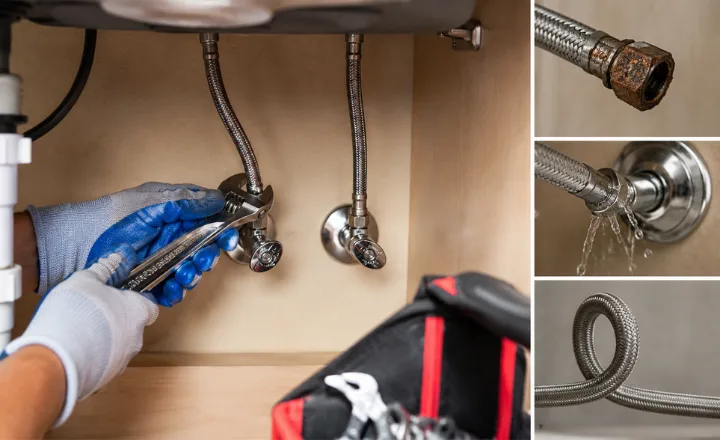
Flexible supply lines are those bendable pipes you usually see under modern sinks. Most of the time, they’re made with a rubber or PVC inner tube, wrapped in braided stainless steel for strength.
That outer braid… it’s doing more work than it looks like.
These lines don’t need to be perfectly straight. That’s the whole point. You can curve them, loop them slightly, adjust them into position without cutting or reshaping anything.
And honestly, that’s why they’ve taken over in most newer installations.
They just make life easier.
Bendable
Easy to install
Available in multiple lengths
You don’t need to be precise down to the millimeter. A slightly longer line still works. That alone saves time.
What Are Rigid Supply Lines?
Rigid supply lines are the opposite in almost every way. These are straight, fixed pipes — usually made from chrome-plated brass or copper.
They don’t bend. At all.
If the distance is off, even a little, you’ll feel it immediately. You either cut, adjust, or start over.
But when they’re installed right… they look clean. Really clean.
You’ll often see them in exposed plumbing setups. Think pedestal sinks, vintage-style bathrooms, or places where the plumbing isn’t hidden away.
Straight structure
Strong material
Clean appearance
There’s something about rigid lines that just feels intentional. Like the install was planned, not improvised.
Pros and Cons of Flexible Supply Lines
Flexible lines are popular for a reason. But they’re not perfect.
Pros
Easy installation (you don’t need exact measurements)
Fits tight or awkward spaces
Budget-friendly options available
Widely available almost everywhere
Cons
Less durable compared to rigid lines
Can wear out over time, especially lower-quality ones
Not ideal if the plumbing is visible and you care about aesthetics
I’ve seen flexible lines last years without issues. But I’ve also seen cheaper ones fail sooner than expected. Quality matters here more than people think.
Pros and Cons of Rigid Supply Lines
Rigid lines feel more “permanent.” That’s probably the best way to describe them.
Pros
Very durable
Long lifespan
Clean, professional look
Ideal for exposed installations
Cons
Difficult installation
Requires precise measurement
Less forgiving in tight spaces
Slightly more expensive
They don’t give you room for error. That’s the tradeoff.
Flexible vs Rigid Supply Lines (Detailed Comparison)
This is where things get a bit clearer. Or sometimes more confusing, depending on what you’re working on.
Installation
Flexible: beginner-friendly, no exact alignment needed
Rigid: requires skill, measuring, and proper alignment
You can install a flexible line in minutes. Rigid lines… not so much.
Durability
Flexible: moderate lifespan
Rigid: long-lasting, more resistant to wear
Not all flexible lines are weak. But rigid ones generally outlast them.
Appearance
Flexible: meant to be hidden
Rigid: designed to be seen
This one matters more than people admit. Especially in open vanity setups.
Cost
Flexible: affordable
Rigid: slightly expensive
Not a huge gap, but it adds up depending on the project.
Which One Should You Choose?
The right choice depends on your setup… and maybe your patience level too.
Some installs are straightforward. Others fight you the whole way.
Choose flexible if
You want easy installation
Space is tight or awkward
You’re a DIY beginner
Choose rigid if
You want a premium, clean look
Pipes are visible
You need long-term durability
For most homeowners, flexible braided lines are the safest and easiest option.
That’s just how it usually plays out.
A high-quality flexible line can save time and installation effort. On the other hand, rigid lines are ideal if you want a clean, premium finish.
Installation Tips for Both Types
This part gets overlooked. And then people run into problems later.
Flexible Line Tips
Do not twist the line during installation
Avoid sharp bends that stress the inner tube
It’s flexible, yes. But not indestructible.
Rigid Line Tips
Measure accurately before cutting
Align everything properly before tightening
If it feels forced, something’s off. That’s usually a sign.
If you’re working with faucet supply lines or replacing ones connected to your bathroom faucet category, the same rules apply. The basics don’t change much.
Common Mistakes to Avoid
Some of these seem obvious. Still happen all the time.
Choosing the wrong length
Overtightening connections
Mixing incompatible sizes
Using low-quality materials
That last one… probably the most common issue I’ve seen.
Frequently Asked Questions
Are flexible supply lines reliable?
Yes, especially when you use good-quality braided ones. They’re designed for modern plumbing setups and handle everyday use well. The key is avoiding cheap materials and installing them without twisting or stressing the line unnecessarily.
Do rigid supply lines last longer?
In most cases, yes. Rigid supply lines tend to have a longer lifespan because they’re made from solid materials like copper or chrome. They don’t rely on inner tubing the same way flexible lines do.
Can I replace rigid lines with flexible ones?
You can. Many people do, especially for easier installation. Flexible lines are more forgiving and don’t require precise measurements. Just make sure the connection sizes match and the line length fits your setup.
Which is better for bathroom sinks?
It depends on the setup. Flexible lines are better for quick installs and tight spaces. Rigid lines are better when the plumbing is visible and appearance matters. Both work fine when installed properly.
Conclusion
So yeah, flexible vs rigid supply lines isn’t really about which one is “better” in general. It’s more about where you’re using them and what you care about more — convenience or durability and appearance.
Flexible lines win on ease. No question there.
Rigid lines win on strength and looks.
If you’re choosing, just think about your setup. How visible the plumbing is. How confident you feel installing it. And maybe how much time you want to spend under the sink.
A smart choice here saves trouble later. Leaks, replacements, all that.
Better to get it right once.
-min (1).png)
Sooraj T. Mathews
Sooraj is a content creator with 5 years of experience and a knack for making SEO work feel like storytelling. With 4 years in the digital marketing game, he blends strategy and creativity to craft content that clicks and converts. Outside of work, you'll find him unwinding with a good puzzle or getting lost in a great book—always curious, always learning.
.webp)
.webp)