.webp)
What Is a P-Trap and Why Your Sink Needs It
A P-trap under your sink blocks sewer gases, catches debris, and prevents odors. Learn how it works, common problems, types, and cleaning tips.
by Sooraj T. Mathews
Sep 04, 2026
4 minute read
Table of Contents
- Introduction
- What Is a P-Trap? (Quick Answer)
- What Does a P-Trap Do?
- How a P-Trap Works (Step-by-Step Flow)
- Parts of a P-Trap Assembly
- Why Your Sink Needs a P-Trap
- Common P-Trap Problems
- Types of P-Traps
- How to Clean or Replace a P-Trap
- Frequently Asked Questions
- Final Thoughts
Introduction
There’s always that bend under the sink.
You’ve seen it. That curve. Not straight like the rest of the pipes. Looks intentional, but also… not something you question for long.
Most people don’t.
You open the cabinet, grab something, close it. That’s the whole interaction.
Until something feels off.
Usually the smell shows up first. Not strong. Just enough that you notice it once, then again later. And that second time is usually when it starts to bother you a bit more than it should.
It doesn’t hit all at once. It sort of lingers. Comes and goes. Enough to make you pause, but not enough to immediately act on it.
So you look under the sink again.
And now you’re actually paying attention to things you’ve ignored before.
What Is a P-Trap? (Quick Answer)
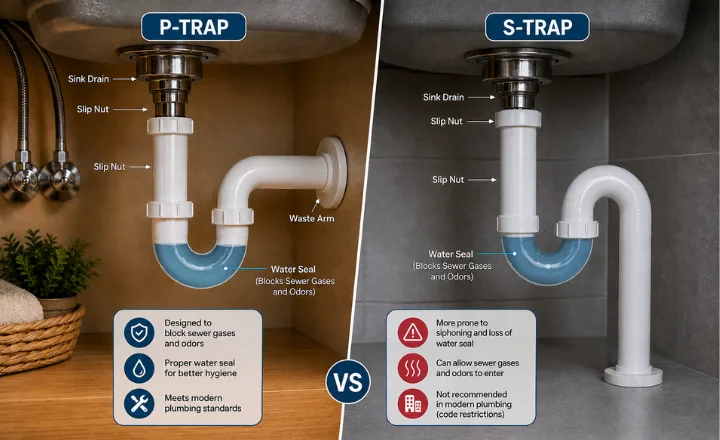
A P-trap is the curved pipe under your sink that holds water and blocks sewer gases from coming back up.
That’s the direct version.
It sits right below the drain. Not hidden, just… not something you think about unless there’s a reason. It’s part of the system, but also kind of doing its own thing.
Holding water.
Which sounds simple. It is simple. But that’s also where it either works or doesn’t.
Because if that water isn’t there, the whole setup feels incomplete. The shape is still there, the pipe is still there, but the function… not really.
What Does a P-Trap Do?
If you explain it too cleanly, it almost sounds like nothing important is happening.
Water goes down. Some stays.
That’s it.
But that “some stays” part is doing all the work.
It creates a barrier. Not solid. Not mechanical. Just water sitting in the bend. That’s enough.
- Blocks sewer gases
- Catches small debris
- Keeps things from getting unpleasant
It doesn’t look like it should be enough. That’s probably why people overlook it.
I’ve seen this happen often. Someone notices a smell and starts cleaning everything above the drain. Scrubbing, pouring things in, trying different fixes.
But the issue isn’t there.
It’s below.
Or… most of the time it is.
Sometimes the trap is just dry. No water sitting there anymore.
That happens more than people expect. Especially in sinks that don’t get used much. Guest bathrooms. Basements. Utility sinks. Places where water isn’t running every day.
Run the tap. Wait a bit. The smell fades.
Feels too simple. So people assume that can’t be the real issue. But it usually is.
And that’s where a lot of confusion comes from—something that looks minor ends up being the actual cause.
How a P-Trap Works (Step-by-Step Flow)
Water goes down.
Hits the curve.
And this is where it doesn’t behave the way you expect. It looks like everything should just pass through.
But it doesn’t.
Some water keeps moving. Some stays behind.
That leftover water settles at the lowest point of the curve. It just sits there. Doesn’t really move unless more water comes through.
And that still water becomes a seal.
Gas from the sewer line tries to come back up. Reaches that point… and doesn’t really get through.
Not easily anyway.
This constant water seal is what protects your home from odors.
No moving parts. No switches. Just shape and water doing something very specific.
Once you see it that way, the design makes more sense. Before that, it just looks like an unnecessary bend in the pipe.
Parts of a P-Trap Assembly
It looks like one piece.
It isn’t.
There are a few parts connected together, and you usually don’t think about them unless something starts leaking.
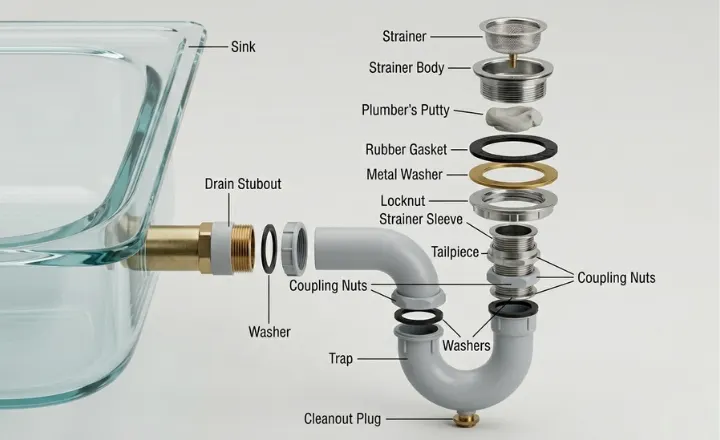
- The curved section
- The pipe going into the wall
- Slip nuts holding things together
- Washers sealing the joints
Each part seems small.
And it is.
But if one fails, you’ll notice.
A washer wears out… suddenly there’s a drip. Not dramatic, just there. And it doesn’t go away.
Sometimes it’s slow enough that you ignore it for a while. Then it becomes harder to ignore.
That’s usually how these things go. Not urgent at first, just persistent.
Why Your Sink Needs a P-Trap
Without a P-trap, your sink connects directly to the sewer line.
Nothing in between.
No barrier. No buffer.
So things come back up. Mostly gases. And once they’re in your space, they don’t just disappear right away.
They linger. You notice it more the longer it stays.
- Sewer gases enter the room
- Odors build up
- The system loses that basic layer of sanitation
- It doesn’t meet plumbing requirements
It’s not just about smell, even though that’s what people react to first.
A properly installed P-trap ensures a clean and odor-free bathroom. That line gets used a lot, but it’s not really exaggerating anything.
It’s just describing what happens when everything works the way it should.
Common P-Trap Problems
Things don’t usually break all at once. It’s slower than that.
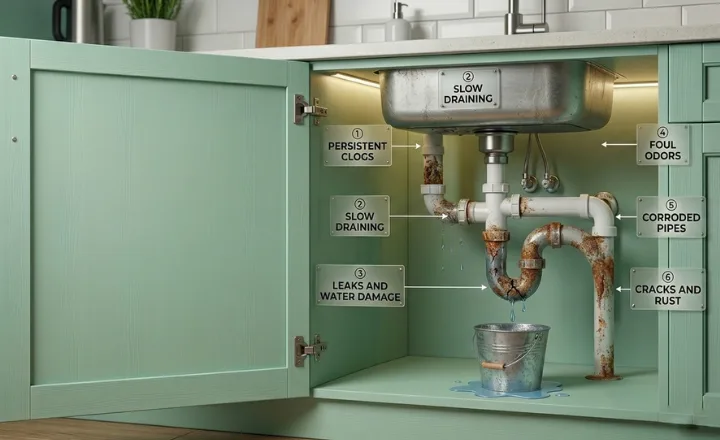
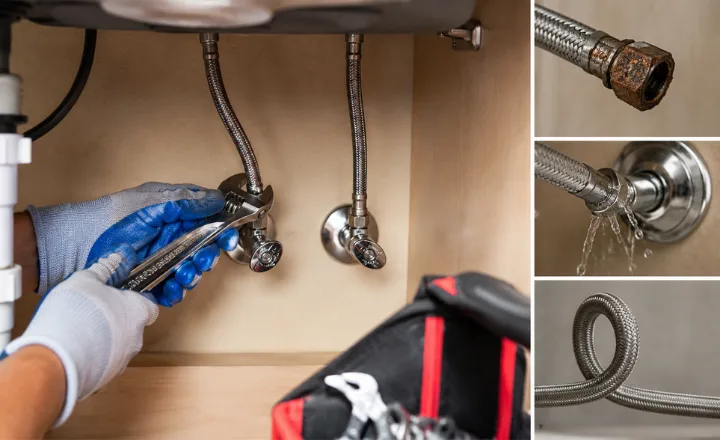
Leak under the sink: Loose connection. Worn washer. Sometimes tightening works. Sometimes it doesn’t.
Bad smell: Trap dries out. No water sitting there. No seal.
Clogged trap: Hair, soap, debris. Builds up slowly… then suddenly you notice something’s not draining the same.
Loose connections: Either from installation or just time. Things shift a little.
None of these are major problems at the start. They just get worse if ignored.
And most people ignore them longer than they should, mostly because nothing feels urgent in the beginning.
Types of P-Traps
Same shape. Different materials.
PVC is the common one. Cheap. Easy.
Metal—chrome or brass—used when visible. Looks better. Usually lasts longer.
ABS plastic is lighter. More of a budget option.
That’s about it.
Choosing durable materials can prevent frequent maintenance. People usually realize that later.
Usually after replacing something more than once.
How to Clean or Replace a P-Trap
This part sounds worse than it is.
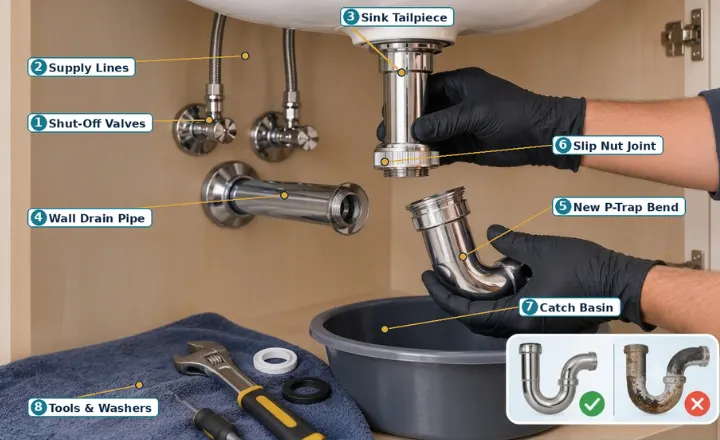
Put a bucket underneath. Loosen the connections. Usually by hand. Remove the curved section slowly—there’s water inside. Clean or replace it and put it back. Tighten everything. That’s it.
Check for leaks. Even a small drip means something isn’t sitting right. Sometimes it’s just alignment. Sometimes it’s a worn washer. Either way, it’s usually not complicated. Just a bit awkward to reach.
Frequently Asked Questions
Why does my sink smell bad even with a P-trap?
Usually the trap has dried out or there’s buildup inside it. Running water can restore the seal. If not, cleaning tends to fix it.
Can I install a P-trap myself?
Yes. It’s one of the simpler plumbing tasks. No special tools in most cases.
How often should I clean a P-trap?
Once or twice a year works for most setups. More if drainage slows down.
Are all P-traps the same size?
No. Sizes vary depending on the setup. Matching the correct size matters when replacing one.
Final Thoughts
It’s a small part. Easy to ignore. But it’s doing something all the time, even when you don’t notice it. Holding water. Blocking gas. Keeping things from turning into something harder to deal with later.
You don’t think about it when it works. You notice it when it doesn’t. And usually by the time you notice it, it’s already been doing its job quietly for a long time.
-min (1).png)
Sooraj T. Mathews
Sooraj is a content creator with 5 years of experience and a knack for making SEO work feel like storytelling. With 4 years in the digital marketing game, he blends strategy and creativity to craft content that clicks and converts. Outside of work, you'll find him unwinding with a good puzzle or getting lost in a great book—always curious, always learning.
.webp)
.webp)